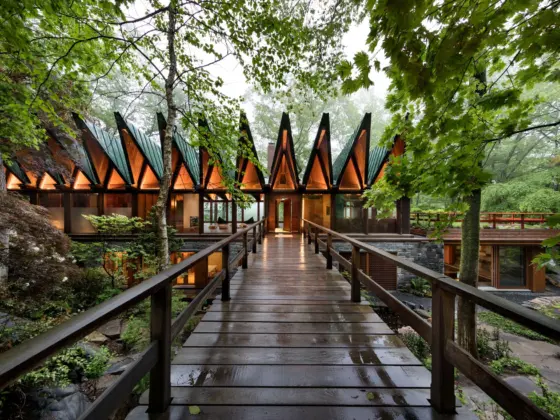
Reppischtal, Switzerland

Category: Private Homes
Year: 2022
Architects: BE ARCHITEKTUR GMBH Architekt FH REG A SIA
Lead Architect: Boris Egli
Client: Private
Photographers: Vito Stallone
Located in Reppischtal, Zurich, this house by Boris Egli of BE ARCHITEKTUR, pays homage to the area’s rural landscape and historical context.
The area is a characteristic hamlet zone of around 15 buildings. For their design, the architects took up the typical barn characteristics and reinterpreted them in a modern way.
From a distance, the residence discreetly blends into its rustic surroundings. The exterior facade is clad in glazed spruce wood –the same type of timber used on traditional Swiss barns.
A pitched roof was designed in the same vein, with tile roofing typical to the local architecture.
Openable windows are concealed behind wooden shutters, while the generous fixed glazing is fronted by wooden sliding doors that provide sun protection, darkening, and privacy.
A raw steel beam serves as a gutter, jutting out beyond the base of the roof. Downpipes were omitted; the rainwater drains off the side like a waterfall.
The building responds to the topography of the site. Building on a slope usually requires excavation behind the building and backfilling in front; this approach was deliberately rejected. Instead, the ground floor is arranged in a series of levels at different heights to follow the existing slope.
A barn is typically used for storage and as a workroom for agricultural production. Although this new building is not a depository, its rooms – bedrooms, bathrooms, closets, etc. – are “stored” within it as closed volumes and are figuratively stacked on top of one another.
This “stacking” creates a sculptural interior, a positive spatial volume within the building.
A negative volume forms around these stacks, comprising a landscape of open living spaces that are interconnected vertically and horizontally. A generous interior unfolds with a sense of endless expanse.
The new building reinterprets the simple, unadorned nature of a traditional barn through its choice of materials.
Exposed concrete slabs for the floor and a special plaster covering the walls ensure a raw, unfinished feel. Two different materials with a similar effect –concrete and plaster– are used throughout the interior to achieve an expressive effect.
The freestanding two-car garage in exposed concrete was created using the same timber formwork as that used for the house facade. A photovoltaic system was installed on the gently sloping concrete gable roof, the solar panels covering the surface like a carpet.
This new home aims with its design to enter into a dialogue with the surrounding agricultural buildings for a unique interpretation of the vernacular barn typology.