Dubai, UAE
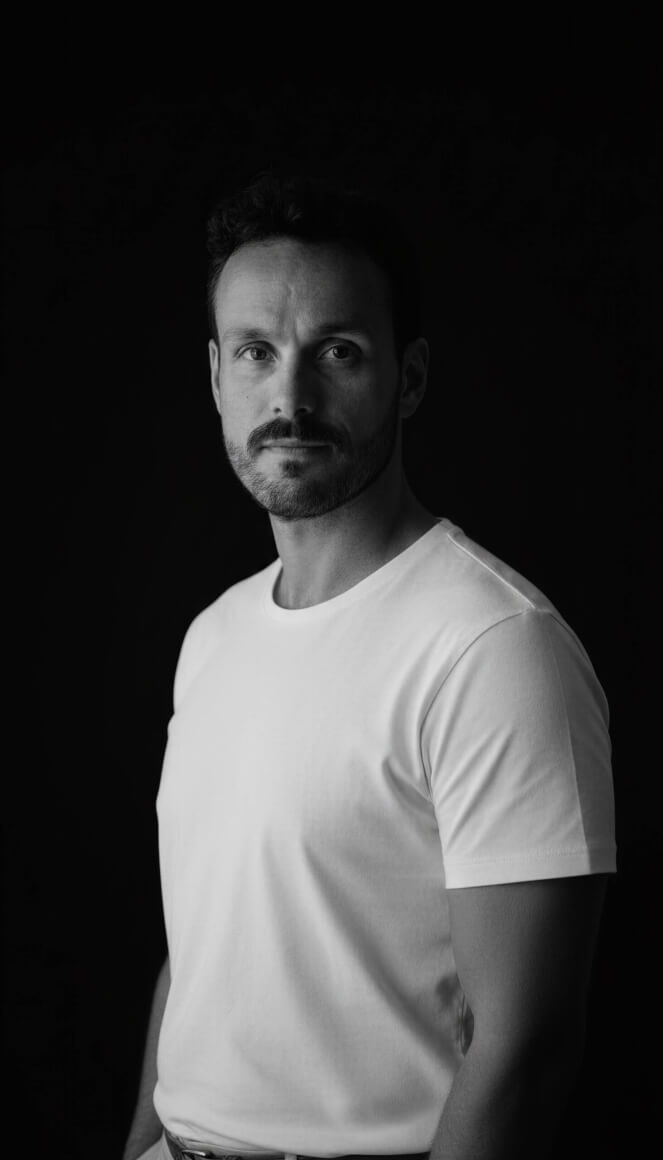
Swiss designer David Girelli has created the Bubble capsule collection for the international design brand Dantone Home.
Comprising an armchair and a sofa, the series explores the tension between architectural discipline and organic volume, setting pure rational geometry against sculptural upholstery defined by fluid, non-linear tufting.
The project began as a search for equilibrium between functional rigor and expressive form. “I took a standard geometric cube, the most rational footprint for a living room layout, and treated it as a blank canvas,” Girelli explains.
“Working within this strict volume, my aim was to infuse it with dynamic movement and softness.”
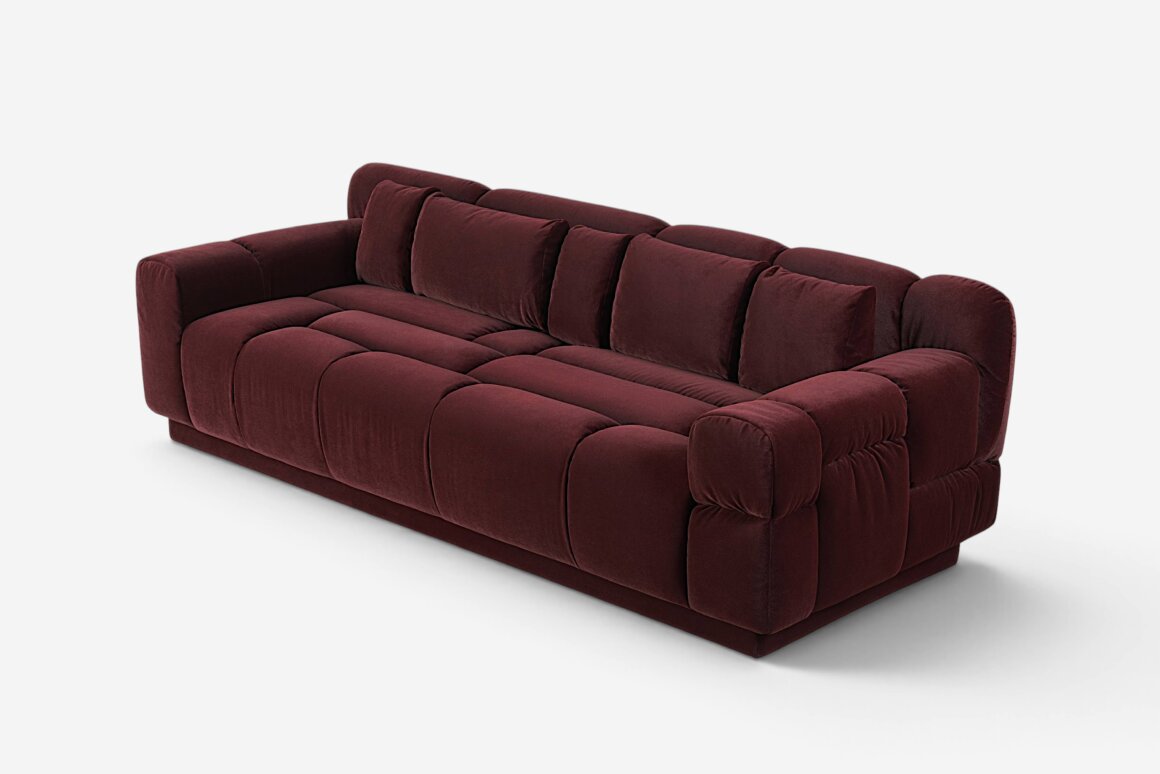
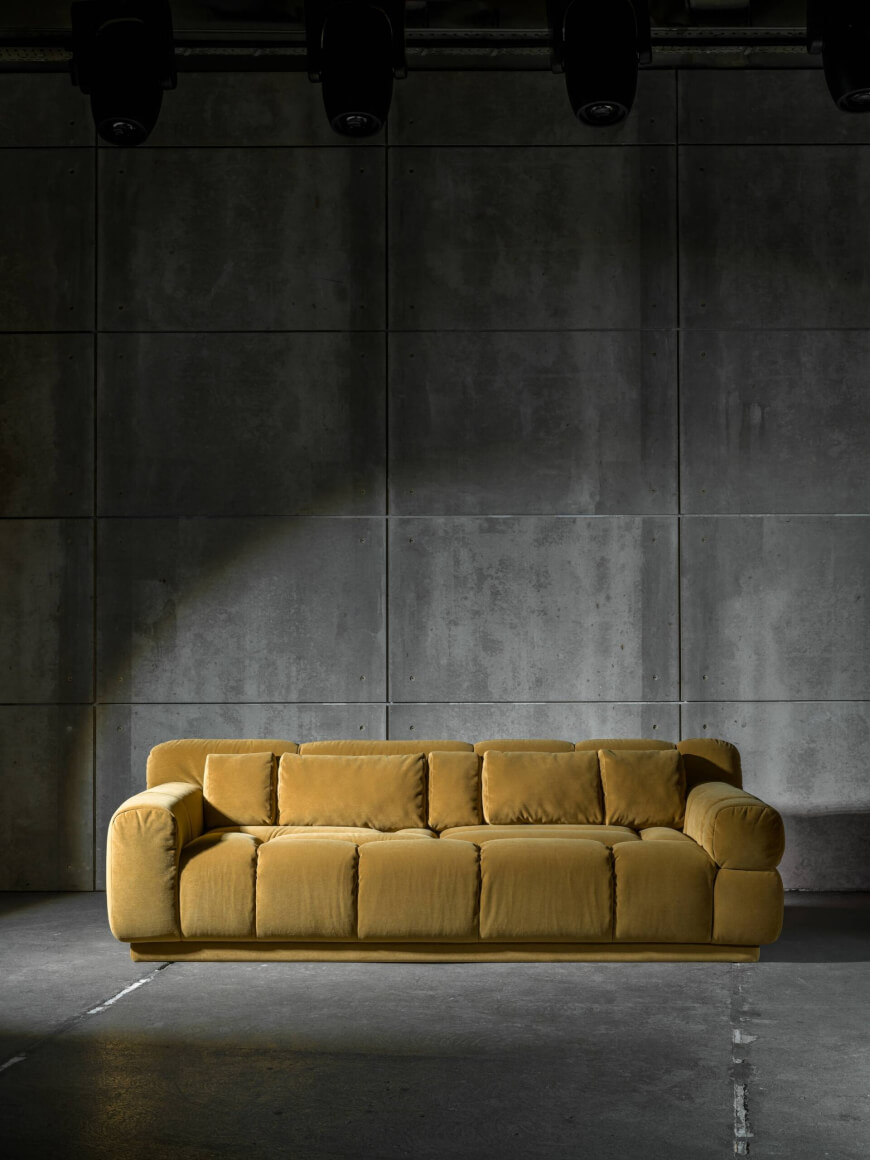
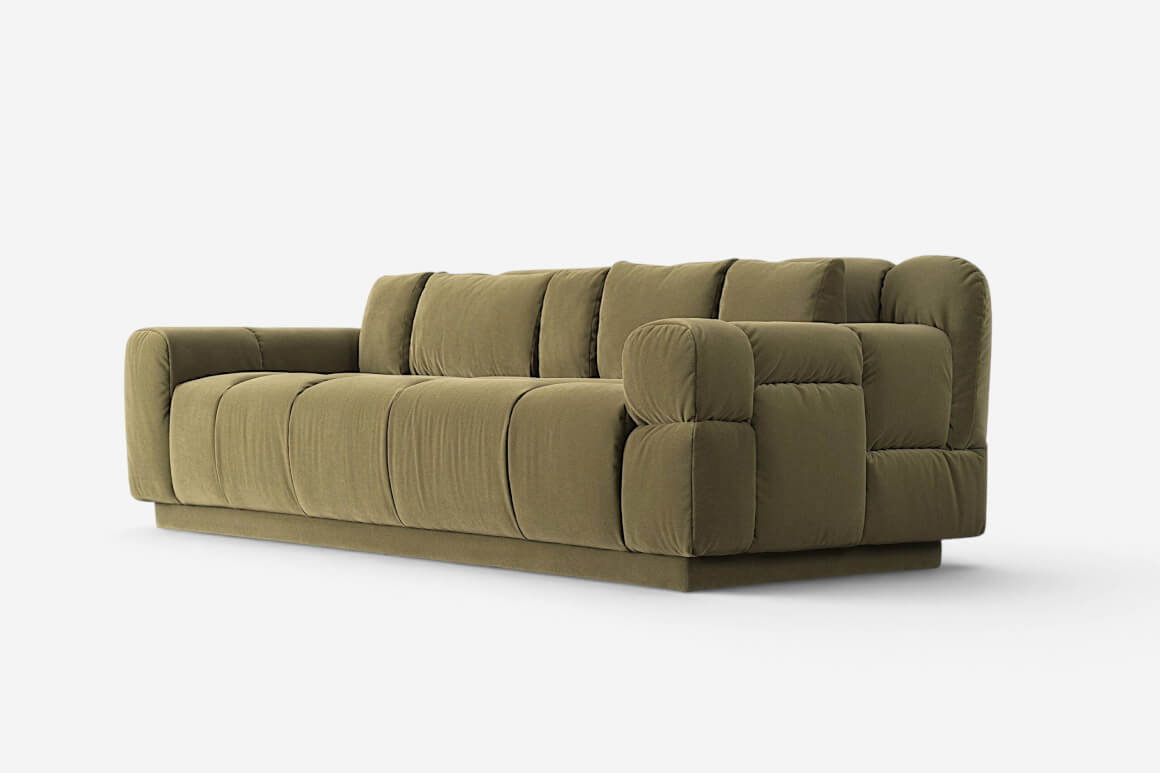
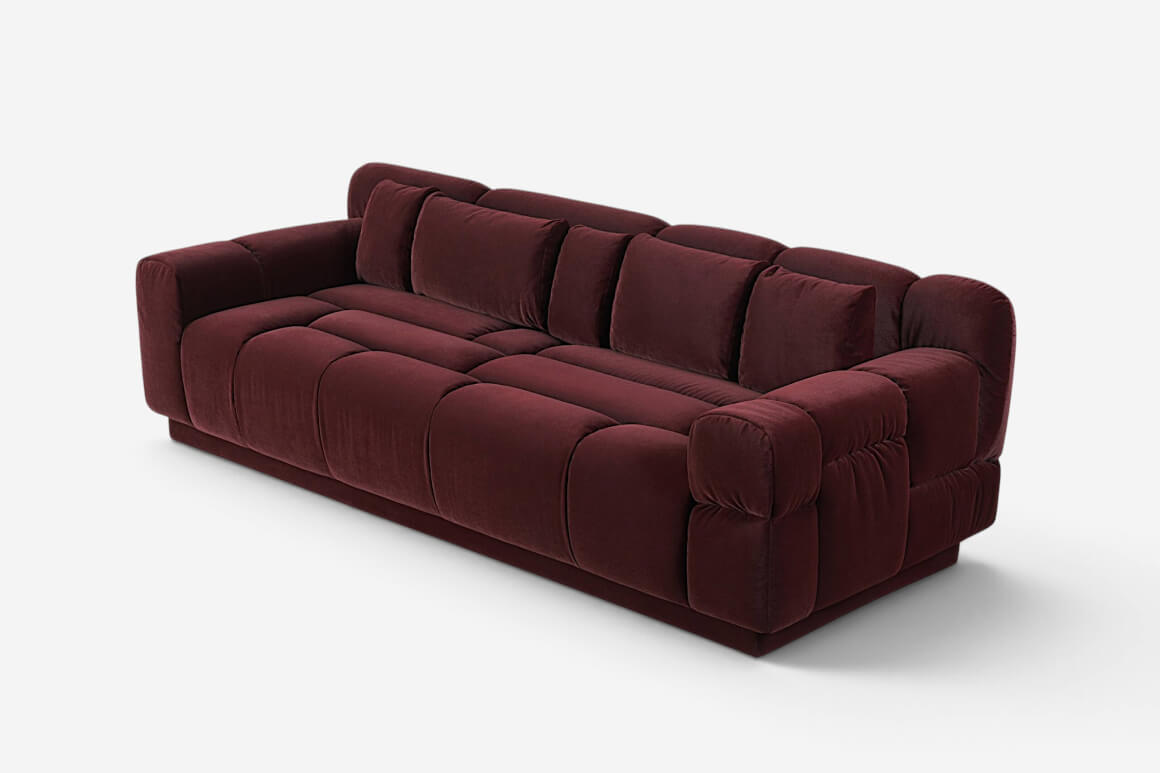
The sofa establishes the visual identity of the whole range. Its defining element is a sculptural armrest with deliberately asymmetrical lines, complemented by rhythmic tufting that underscores the generous depth and plushness of the seat.
Asymmetric quilting creates a shifting relief, so the silhouette reveals a distinct presence from every vantage point, while irregular stitch intervals accentuate its soft contours and tactile depth.
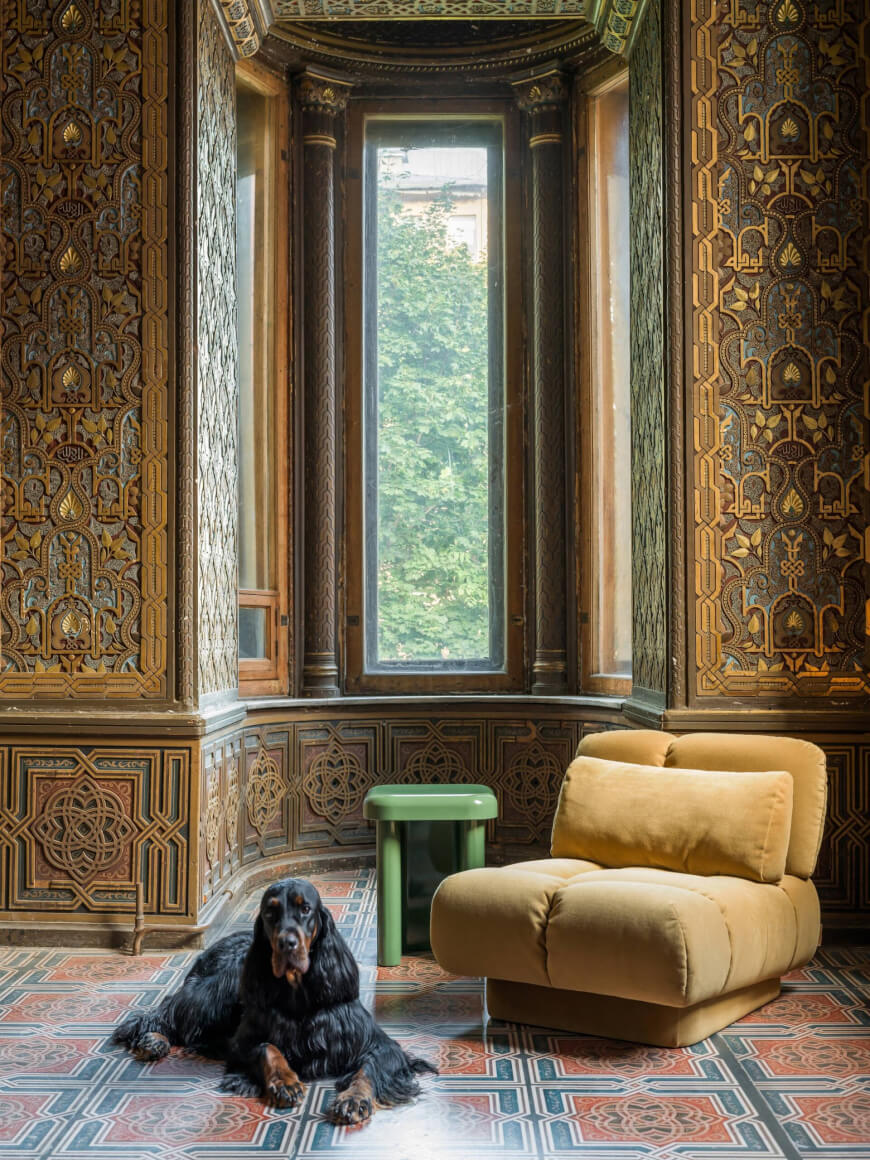
The armchair translates this language to a more intimate scale. Its compact dimensions called for meticulous fine-tuning of proportions to ensure uncompromising ergonomics.
A voluminous seat and backrest rest on a geometric base with a subtle recline, and a detachable trapezoidal cushion softens the architectural crispness of the frame.
Beneath the effortless silhouette lies rigorous mathematical precision. With an irregular tufting pattern, controlling fabric tension is far more complex than working with a standard coordinate grid.
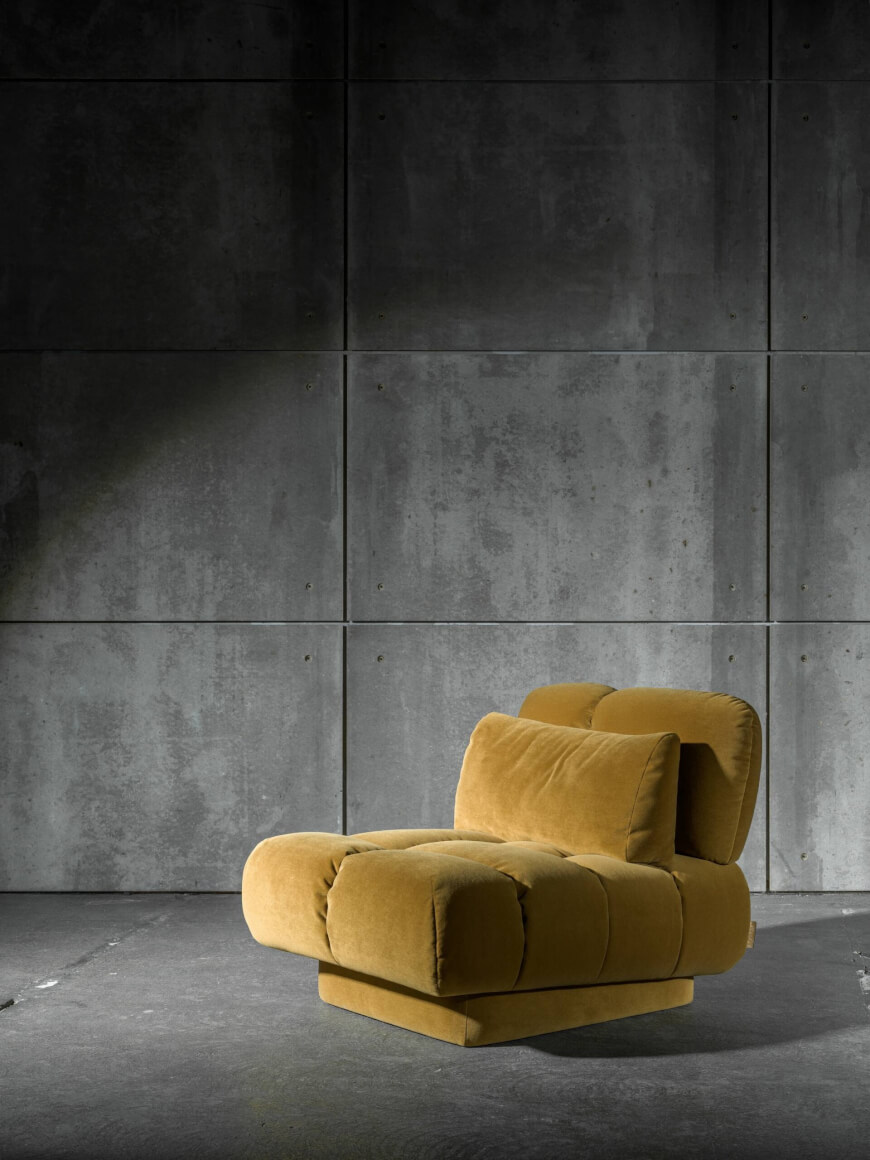
A rigorous prototyping phase was needed to balance the volume of the raised segments against the natural drape of the folds, since a deviation of merely two millimeters compromised the visual integrity of the entire piece.
“Collaborating with the artisans at Dantone Home made it possible to refine the design to perfection,” Girelli notes. “The team boldly embraced the technical complexities of non-linear form-giving and gave me complete creative freedom.”
The deeply contoured upholstery reveals its multi-layered character under changing light, as sculpted ridges catch daylight and create soft gradations from highlight to shadow.
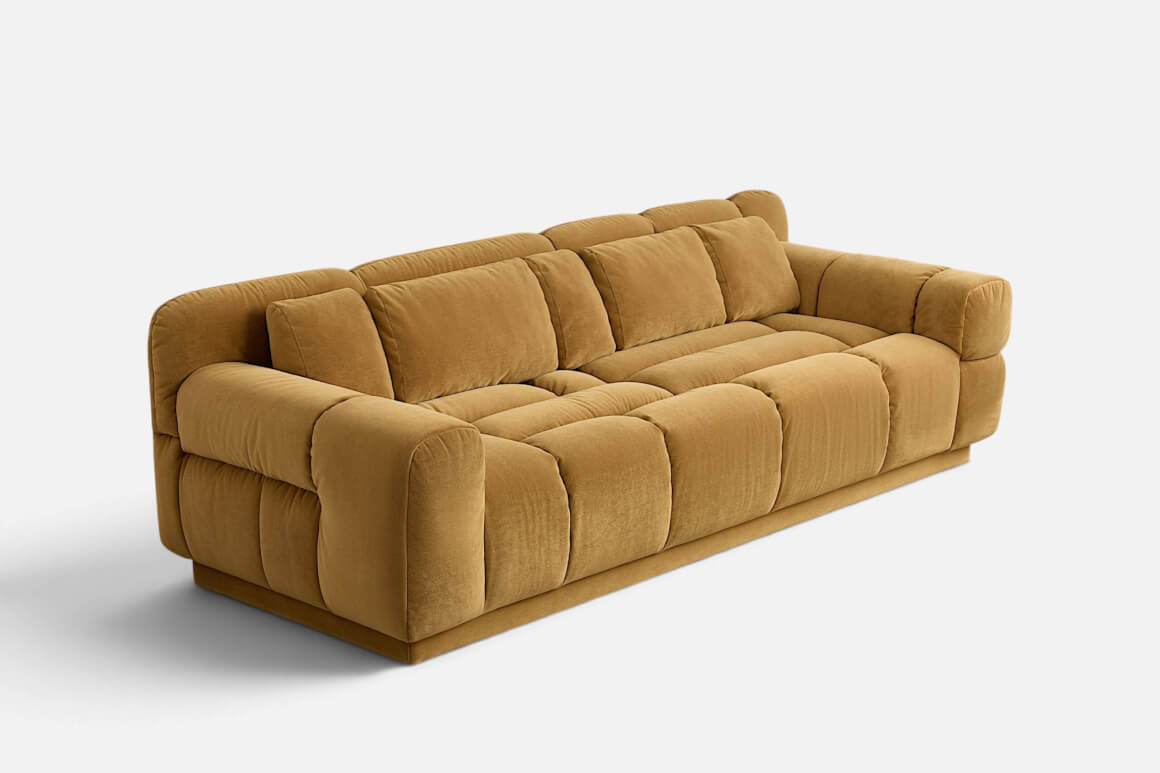
Three nature-derived tones were chosen: Amber, a warm honey shade along the crests that deepens into refined bronze within the seams; Moss, a serene olive in direct daylight that gains pine-needle depth in shaded folds; and Maroon, an intense wine shade that highlights the fluid drape of the textile.
The collection also answers a broader shift in taste. As daily life migrates into the digital realm, interiors are shedding sterile minimalism for objects with genuine tactile resonance, and global design currents are pivoting toward sculptural mass, artisanal craftsmanship, and pieces with collectible sensibilities.
“Twenty years from now, authentic, physical objects crafted by human hands will play an indispensable role in our homes,” says Girelli. “They will serve as our anchors, re-establishing our connection to tangible reality.”
About: David Girelli is a Swiss designer whose work balances architectural rigor with expressive, sculptural form. For Bubble, he began with the most rational of volumes, the cube, and infused it with movement and softness, working closely with the artisans of Dantone Home.
Dantone Home is an international design brand known for its craftsmanship and its willingness to take on technically demanding forms. Girelli believes design must return to its origins and embrace the principles of absolute sustainability.
For him, the greatest reward is taking the journey from an abstract thought to a beautifully realized object, one that brings joy to someone in their home.
The source text contains no biographical details beyond these, so I kept the About paragraph to what it supports. If you send Girelli’s and Dantone Home’s official bios, I can fold them in.
Project: Bubble Seating Series
Lead Designer: David Girelli
Designers: Dantone Home
Photography: Mikhail Chekalov