Richmond, Virginia, USA
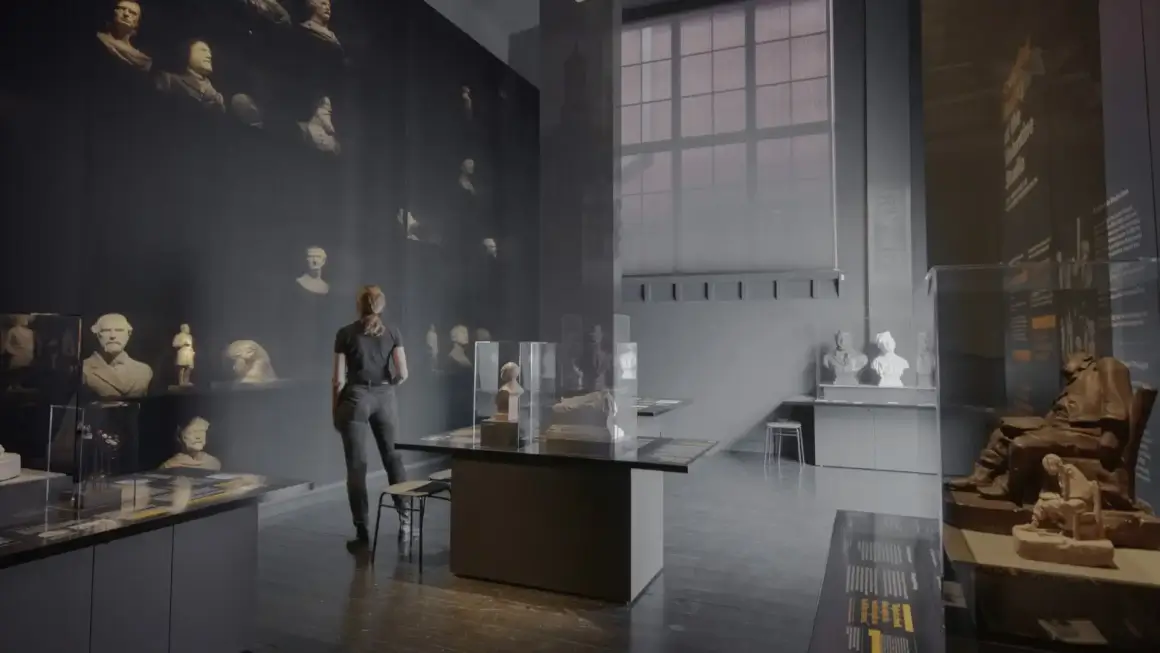
Edward Valentine was a sculptor and key figure in creating the Lost Cause mythology that permeated the nation after the Civil War.
His family founded The Valentine Museum. Located at the core of the museum’s campus since 1936, his studio renovation reimagined the interior.
Now it reflects an honest examination of his work in the broader context of racist ideology and its implications in the public realm through civic monuments.
The Valentine Museum by Studio Joseph, received an 2026 International Architecture Honourable Mention from The Chicago Athenaeum: Museum of Architecture and Design.
The museum hosted multiple public engagement opportunities before the design process began and at each milestone. Community input via online surveys, focus groups, group tours, and public programs shaped the installation.
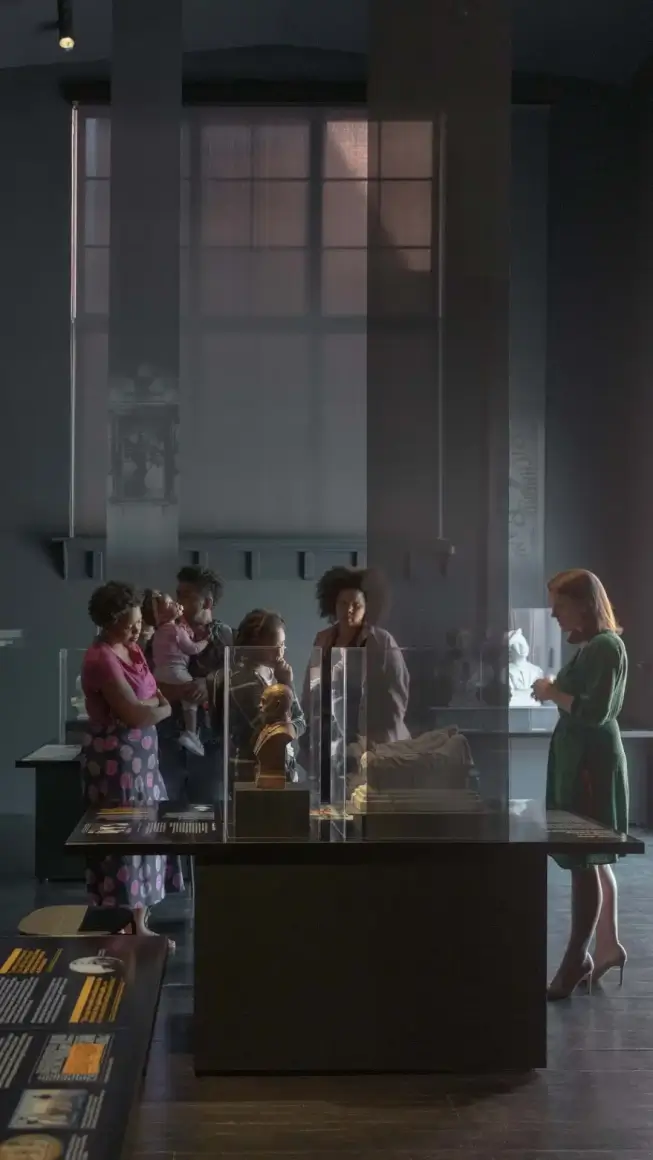
The design team tested content and display concepts to confirm that the historical narrative and the use of artifacts are understood as intended.
The architectural transformation of the interior asserts a new narrative armature utilizing physical design and multimedia.
The scope of work included structural and mechanical upgrades and moisture-proofing of the shell. At only 640 square feet, the installation is efficiently planned to support both individual engagement and larger groups.
The design elements work together to reinforce narrative content while allowing space for guests to gather, learn, reflect, or engage in dialogue with one another.
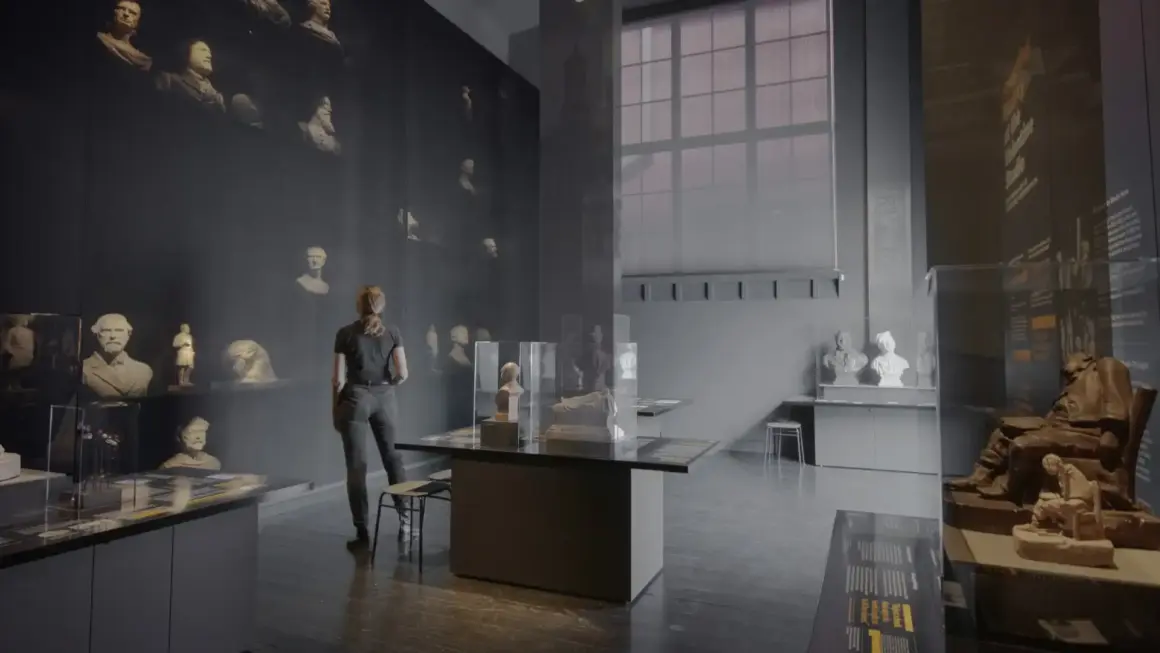
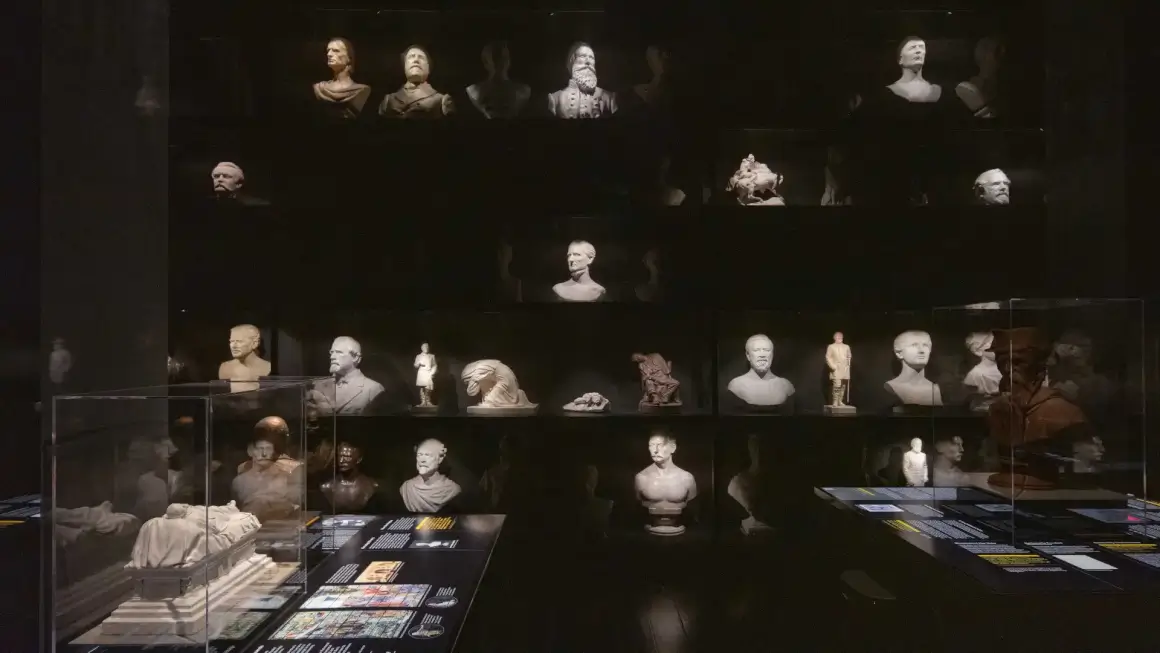
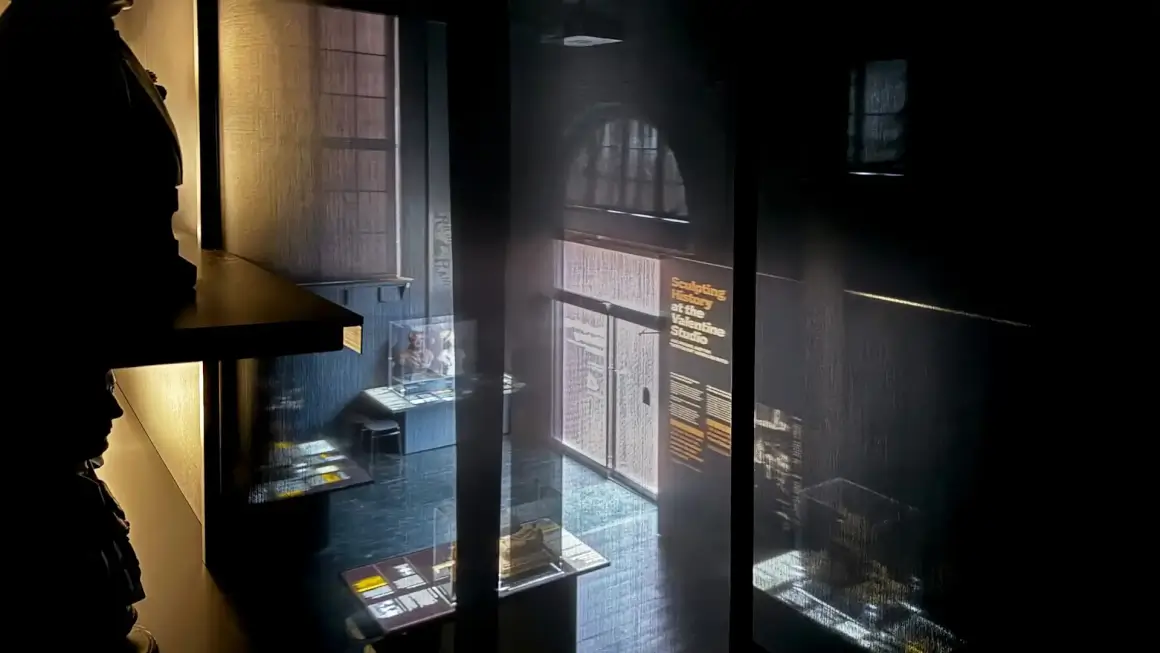
Over 84 of Valentine’s sculptures are located behind a black scrim. This theatrical strategy allows them to be seen only when lit from within by LED strips at each shelf and individual spotlights.
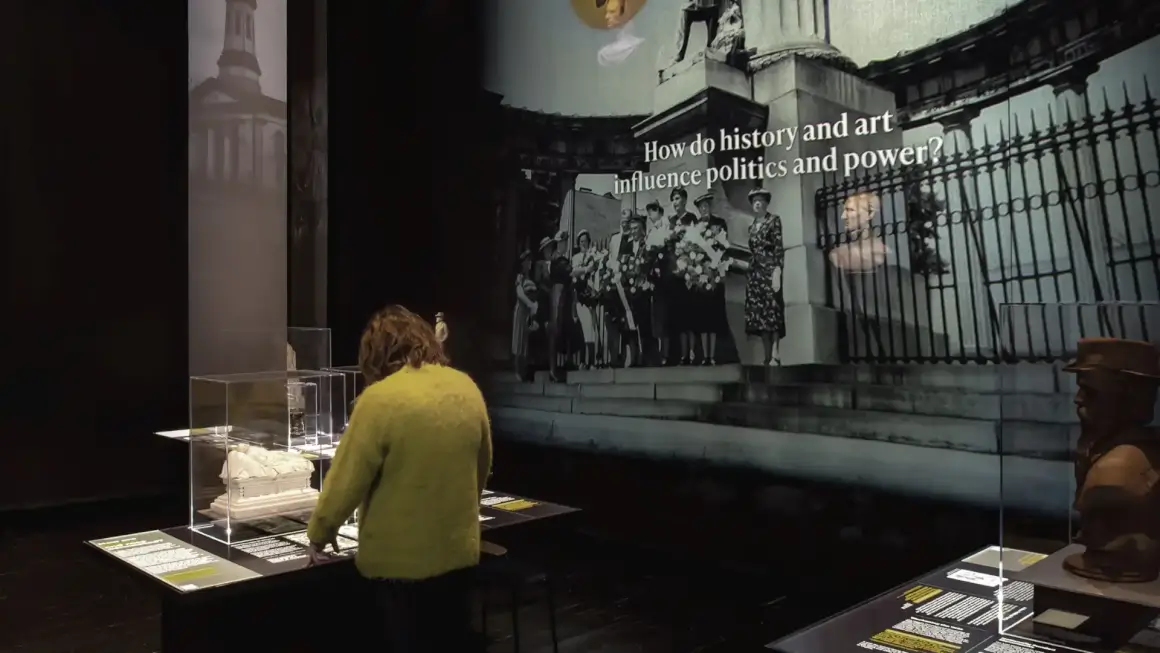
When a projection is cast onto the scrim, it remains hidden. This awe-inspiring, transformative visitor experience changes the sculpture’s power dynamic. A 15-minute media projection offers a sensory experience as visitors explore the tables.
It furthers the connection between historical events and contemporary issues through projected diagrams, animations, maps, and other graphic elements, while the related sculptures illuminate from behind the scrim.
The dramatic effect helps visitors to understand the context without aggression.
The tables have surfaces of approximately 3 feet by 6 feet with backlit graphics. Each talks to a racist tactic—violence, religion, politics, money, and education. The top surface floats on recessed bases, allowing visitors to stand or sit on stools.
In addition to carefully crafted texts, vitrines containing relevant artifacts and sculptures are embedded below and placed on the surface.
A series of scrims attaches from the table to the ceiling at the vitrines, bringing the full scale of the room into view and partially obscuring more racist artifacts. Community response is vital to the educational process.
It occurs at a kiosk where visitors can write a response and share their thoughts with others. These comments are posted online, continuously updated, and displayed in the studio to reflect current sentiments.
The results have exceeded expectations in terms of impact. Visitation in 2024 increased by over 125% compared to the same period in 2023, and member visits have more than quadrupled.
The length of an individual visit has proved to be twice as long as anticipated, as most people watch the entire film, engage with the table-based content, and use the community response kiosk.
Project: The Valentine Museum: Sculpting History at the Valentine Studio Art, Power and the Lost Cause American Myth
Architects: Studio Joseph
Lead Architect: Wendy Evans Joseph
Design Team: Monica Coghlan, Alexandra Adamski, Ruben Gomez Diaz, Ksenia Dynkin, Wonwoo Park, and Anthony Roy,
Associate Architects: Glavé & Holmes Architecture
General Contractor: Kjellstrom and Lee Inc.
Client: The Valentine Museum