San Diego, California, USA
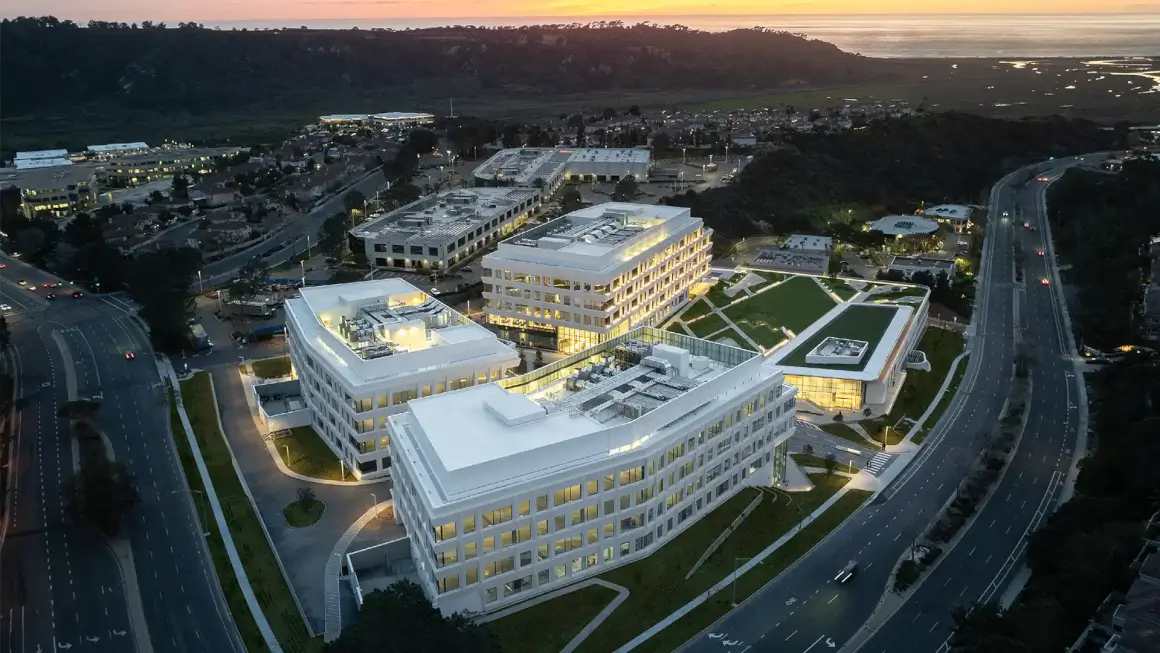
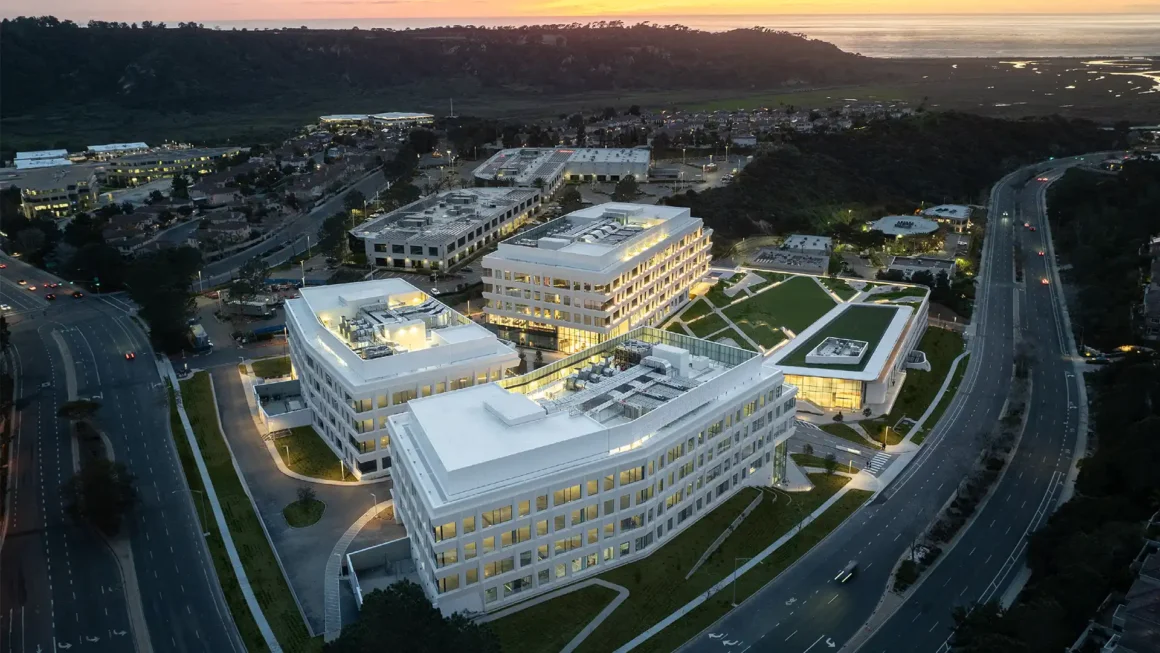
Offering exceptional views of the Pacific Ocean and its surrounding natural landscape, the Torrey Heights campus in San Diego works in tandem with its environment to express its own character while echoing the site’s layered geologic formations. With a goal of providing flexible, technologically advanced laboratory space, this life science campus provides three thoughtfully designed, state-of-the-art scientific workplace facilities and an amenity building totaling 515,000 square feet.
Torrey Heights by Flad Architects won an American Architecture Award 2025 from The Chicago Athenaeum: Museum of Architecture and Design.
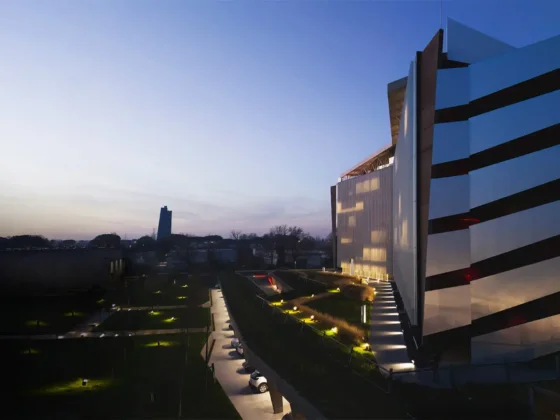
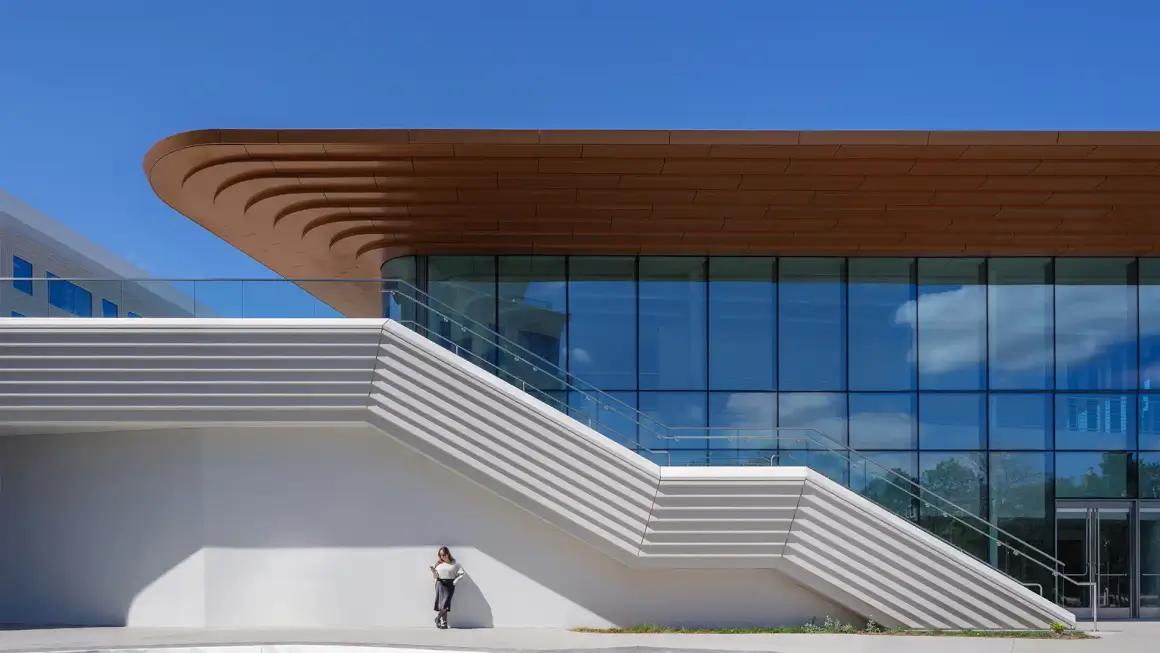
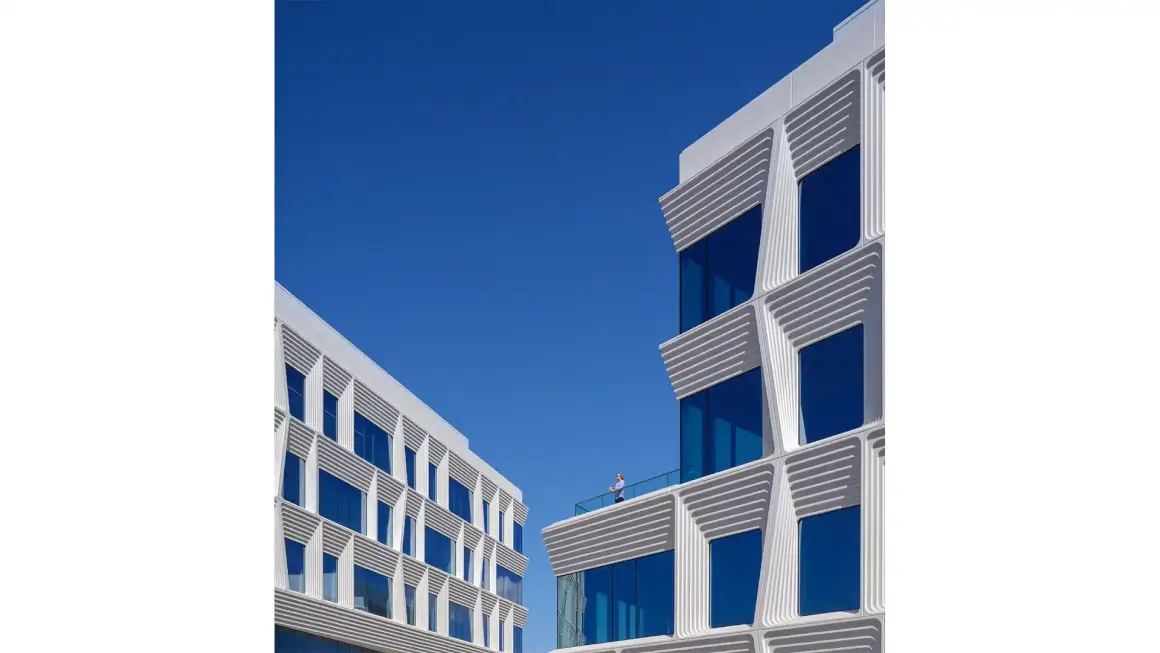
Adjacent to a natural arroyo, the design team took inspiration from the area’s geologic forms. With a façade composed of highly articulated, unitized Glass Fiber Reinforced Concrete (GFRC) panels, the envelope emphasizes depth and texture. Appearing to be assembled from custom-designed panels, the exterior represents the careful choreography of four standardized designs to create its signature look.
The neutral-colored GFRC panels serve as a backdrop to the environment, enabling the façade to change color and texture with the sunlight at different times of the day and year. As day turns to night, strategically placed design lighting accentuates depth and articulation while illuminating the main public area.
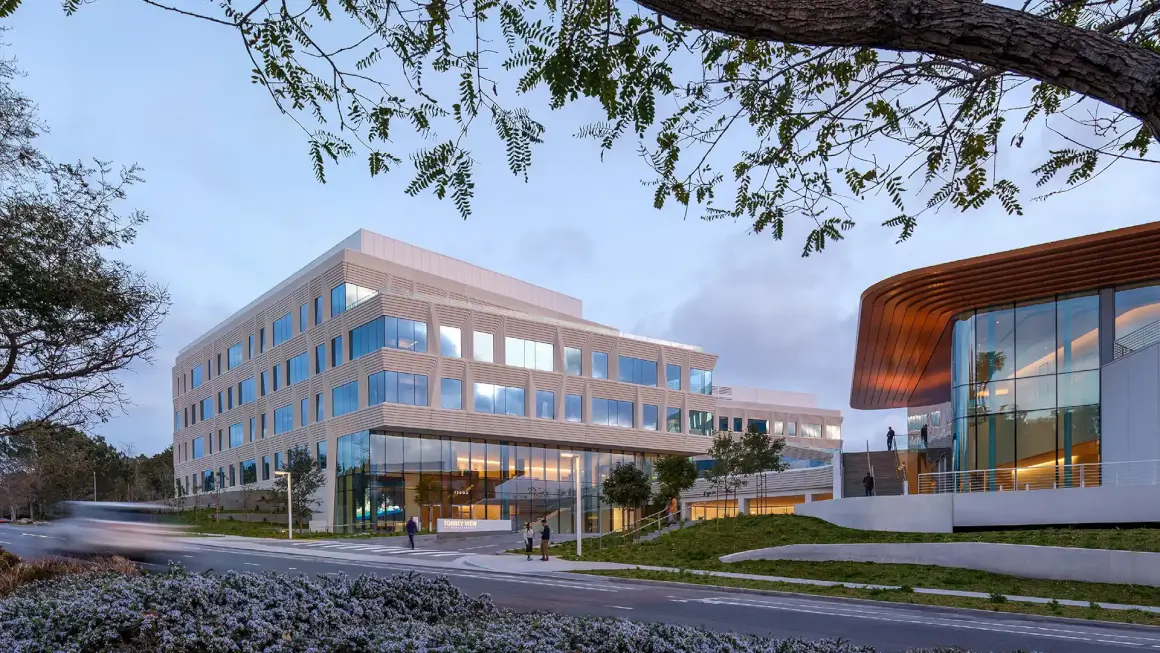
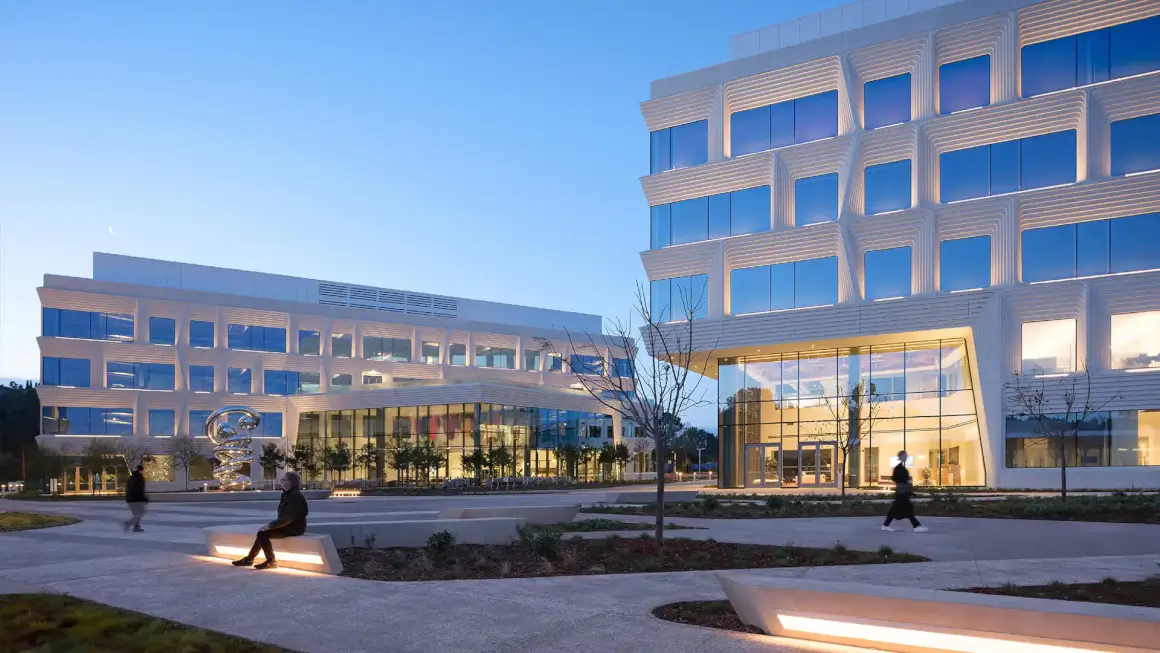
Integrating nature and technology to create this inspiring workplace, the design of the campus ensures the building remains in constant dialogue with its surroundings, offering a dynamic visual experience.
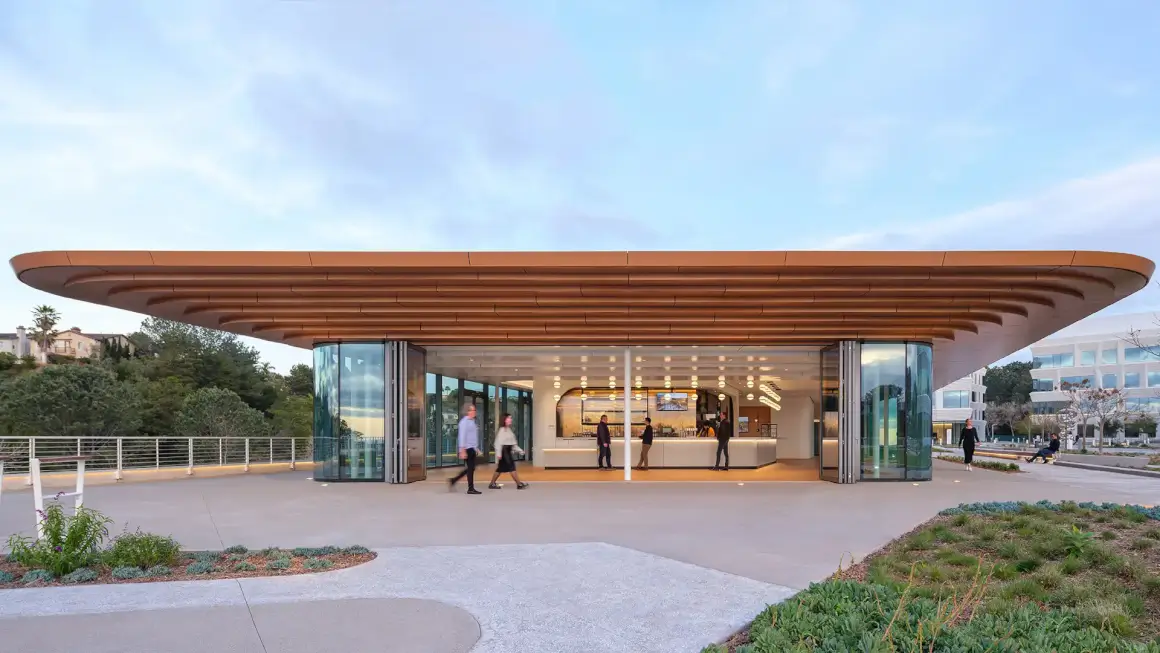
Taking advantage of the sloping terrain, the parking garage is tucked below grade to create a publicly accessible plaza above, known as the mesa, uniting the campus and providing connection to the outdoors. Integrated into the mesa is a signature amenity building featuring a restaurant, bar, café, library, and lounge. The amenity building’s green roof reduces heat gain and runoff, while also offering an inviting view from upper levels.
The project uses planting strategies and water-efficient irrigation systems to far exceed the stringent water conservation requirements of the California MWELO Ordinance. The established, mature landscape will only need 89 percent of the total annual water allowed per the ordinance. The parking podium area and terraces on all buildings include substantial plantings to significantly reduce the total impervious surface and capture runoff. All surface runoff from roofs and pavement is captured, treated, and stored through a combination of bioretention basins, underground storage tanks, and media filters.
For the interior, flexible floor plates allow occupants to reconfigure spaces to accommodate future technologies and workflows. Access to outdoor patios and decks is provided from shared workspaces near the labs. Each building carefully separates visitor flow from discrete service areas that allow for potentially hazardous laboratory chemicals and other materials to be safely and efficiently staged and moved on- and off-site.
The project targeted LEED Gold and Fitwel sustainability certifications. Materials have been specified with low-to-no VOCs. Single-pass mechanical ventilation strategies provide optimal indoor air quality.
To maximize energy efficiency while also preserving light and views, digital tools were applied to assist in massing, building orientation and placement, and façade development. This allowed the ability to promote occupant wellness by providing interior daylight and views without compromising building performance. In addition, single-pass air systems meet stringent lab requirements and benefit occupants throughout the buildings.
The project team utilized an integrated design process to evaluate energy conservation measures and cost savings, which prompted the owner to select a higher performing chiller model and a higher performing condensing boiler. Future lab spaces have a Variable Air Volume (VAV) system providing 1.5 CFM per ft² of outdoor air, reduced by 50 percent during unoccupied periods. Energy Star equipment was specified for the amenity building. Lighting systems are all LED and designed to reduce lighting power density over the ASHRAE baseline. Lighting power densities in unfinished office and lab spaces are 0.72 W/ft² and 0.99 W/ft².
Life science workplaces generate life-saving vaccines, therapeutics, and other beneficial breakthroughs. This campus goes beyond typical lab and office design, providing a spectacular setting for science by optimizing views, amenities, and tie-ins with local topography to create an experience that inspires occupants and site visitors. The result is a cohesive campus with a unique brand and a sense of place that fosters innovation and scientific breakthroughs.
Architects: Flad Architects
Design Team: Philip Ra, Mauricio Ortega, Seong Lee, Ali Nasiri, Kenta Oye, Alysia Wang, Leigh Parker, Hector Hernandez, Joseph Marshall, Ed Huab, Graham Best, Astra Mendez, Tamara Gelvin, and Greg Lehman
General Contractor: Clark Construction Corp.
Client: Breakthrough Properties LLC.
Photographers: Jason O’Rear