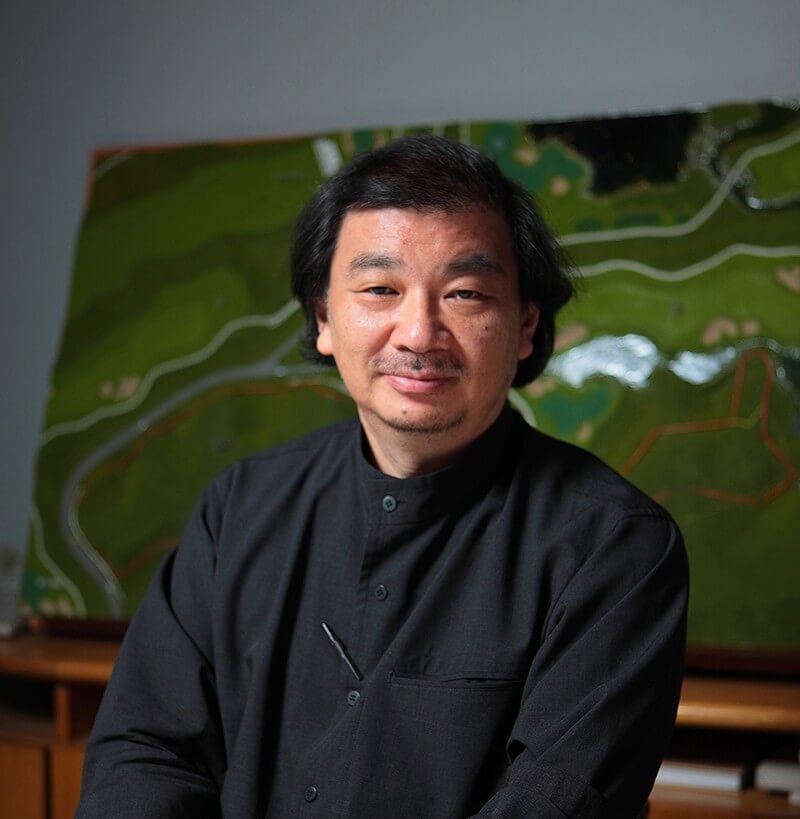
Internationally Recognized as Architecture’s Highest Tribute in the United States, the Prize is Officially Presented to Shigeru Ban at a Gala Reception and Dinner during the 31st American Architecture Awards at The Arts Club of Chicago this December 11.
CHICAGO, ILLINOIS (December 8, 2025) — The Chicago Athenaeum: Museum of Architecture and Design, together with The European Centre for Architecture Art Design and Urban Studies, have named the Japanese architect Shigeru Ban as the 2025 recipient of the American Prize for Architecture.
Shigeru Ban is widely respected globally for his innovative approaches to environmentally sound architecture and his devotion to humanitarian efforts in the wake of devastating natural and manmade disasters.
The jury for the Prize voted for him unanimously, citing his extraordinary architecture and his extraordinary humanitarian efforts as an inspiration to the practice of architecture, not only in the United States, but across the globe, and as an “architect who should be rightly honored and truly emulated by all who believe in humanitarian causes.”
“The 2025 Laureate reflects this spirit of The American Prize for Architecture to the fullest,” states Christian Narkiewicz-Laine, architecture critic and president/CEO of The Chicago Athenaeum, “as it recognizes living architects for excellence in built work and who make a significant and consistent contribution to humanity.”
The Prize, formerly named after the renowned Chicago architect and founder of modern architecture, Louis H.
Sullivan, is internationally acclaimed as America’s highest tribute to any one outstanding design practitioner or design office that has emblazoned a unique, singular path for design excellence in today’s contemporary architecture.
“For 30 years, Shigeru Ban has been responding with creativity and high-quality design to extreme situations caused by devastating natural disasters,” continues Narkiewicz-Laine. “His buildings provide shelter, community centers, and spiritual places for those who have suffered tremendous loss and destruction.”
“From his offices in New York, Paris, and Tokyo, Mr. Ban is best known for his pioneering work with paper, particularly recycled cardboard tubes used to quickly and efficiently house disaster victims. Many of his notable designs are structures that are temporary, prefabricated, or incorporate inexpensive and unconventional materials in innovative ways.”
“His innovative use of material and his dedication to humanitarian efforts around the world, have earned him global recognition as a committed teacher who is not only a role model for younger generations, but also an inspiration to architects and others committed to humanitarian causes and rising from earthquakes, floods, and other catastrophic natural events,” notes Narkiewicz-Laine.
Mr. Ban’s Voluntary Architects’ Network (VAN), a not-for-profit organization he founded and established in 1995, has undertaken more than 65 relief projects on six continents, providing short- and long-term housing, schools, community centers, medical facilities, NGO workspaces, places of worship, arts facilities, and cultural centers for people displaced by natural disasters and war.
Around that time, in 1994, the genocide in Rwanda had displaced about 2 million people, Mr. Ban reached out to the Japanese branch of the United Nations High Commissioner for Refugees and sent a letter to its headquarters in Geneva to propose cardboard tube shelters made of recycled paper.
With no reply, he flew on his own to Switzerland without an appointment; and ultimately, the determined architect was hired as a consultant offering his fortuitous paper tube solution for shelters that could be manufactured locally, reducing transportation costs and environmental impact.
In July 2015, Mr. Ban began the first VAN project to rebuild homes for the victims of that year’s Nepal earthquake.
The structures of the homes he designed were wood framed for flexibility and one that could be built fully with brick walls. The homes are thus quickly and easily constructed. Also, the Nepalese used them for many other purposes, such as schools.
With the 2022 outbreak of the recent war in Ukraine, Mr. Ban developed the Paper Partition System (PPS) for temporary shelters for the increasing number of refugees fleeing to neighboring countries inside Europe.
This simple partition system ensures privacy for inhabitants and has been used by VAN in numerous evacuation centers in regions hit by disasters, such as the Great East Japan Earthquake (2011), Kumamoto Earthquake (2016), Hokkaido Earthquake (2018), and torrential rain in southern Kyushu (2020).
In June 2023, a prototype of the SHS (Styrofoam Housing System), completed in Lviv, Western Ukraine, is made of GFRP (Glass Fiber Reinforced Plastic) wrapped around insulation panels and is lightweight and easy to construct.
The prototype was built in a temporary housing complex in Lviv, where about 1,300 IDPs live, and will be used as a classroom for children to learn music and drawing.
That same year, Mr. Ban designed a new surgical ward for a hospital in Lviv—the largest hospital in Ukraine that had received large numbers of patients since the beginning of the war and that necessitated an urgent expansion of the hospital’s functions.
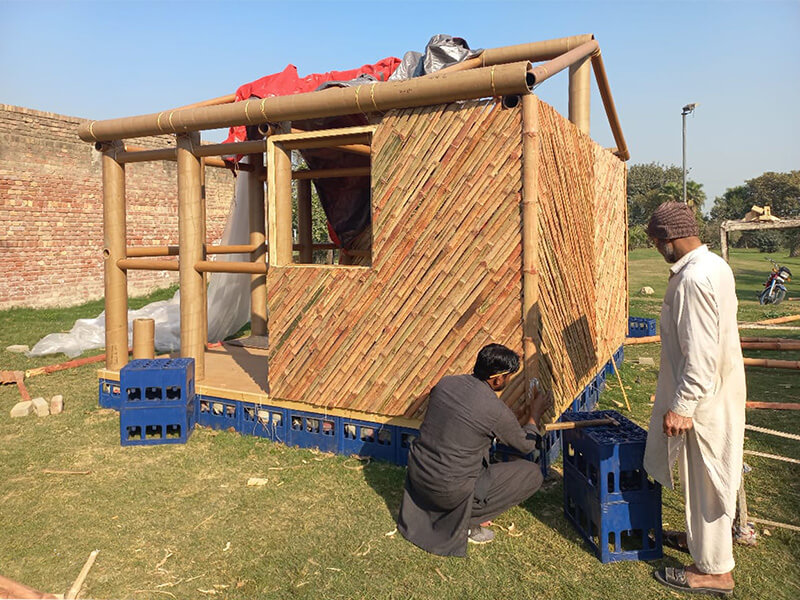
In 2023, Shigeru Ban’s VAN provided Paper Partition System (PPS) in evacuation centers in Antakya and Mersin, as well as Paper Log Houses (PLH) in Antakya, in response to the Turkey-Syria devastating earthquake that occurred on February 26, 2023, which levelled entire villages, towns, and historic cities and killed over 100,000 people.
Temporary housing for now hundreds of homeless Turks and Kurds was composed of beer crates filled with sand bags, and wooden panels to build the walls between the paper tube columns, placed every 1.2 meters.
This enabled the construction to be carried out in a short period of time.
Roofs were made of paper tube frames and plywood decking, and large holes were cut out on the plywood to ensure safety during construction, allowing people to work from the hole instead of climbing on top of the roof.
In 2024 and for the Noto Peninsula Earthquake Disaster Relief Project in Japan, a temporary housing prototype was again devised using the Paper Partition System (PPS) with cardboard beds to ensure privacy at evacuation centers for disaster victims from the Noto Peninsula Earthquake in January of that year.
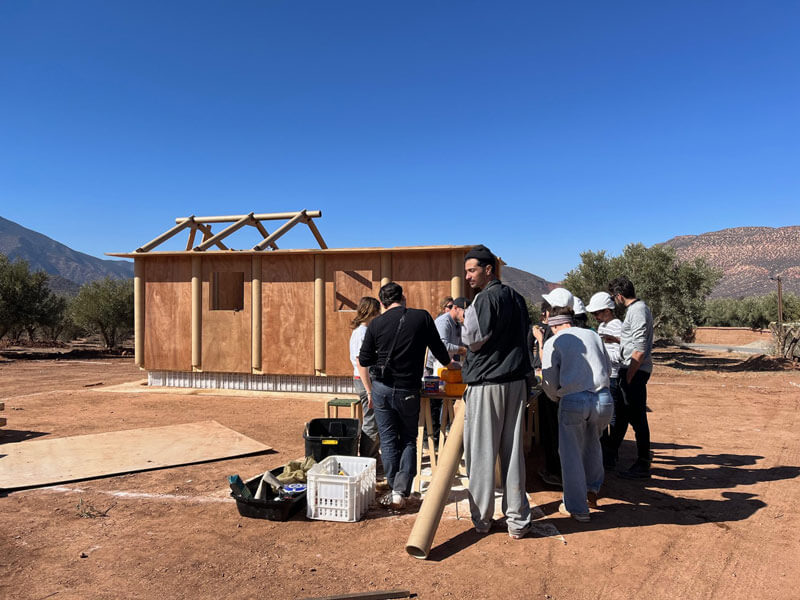
Also in 2024, a Paper Log House prototype was designed by Mr. Ban for Marigha, Morocco, a mountain village, which was heavily affected by the 2024 earthquake in order to serve as an information center for disaster recovery.
The house, constructed and assisted by local Moroccan architects, Fayçal Tiaïba of Laberinto Studio and Khalil Morad El Ghilali of Atelier Be, was donated to a local NGO to lead the reconstruction efforts.
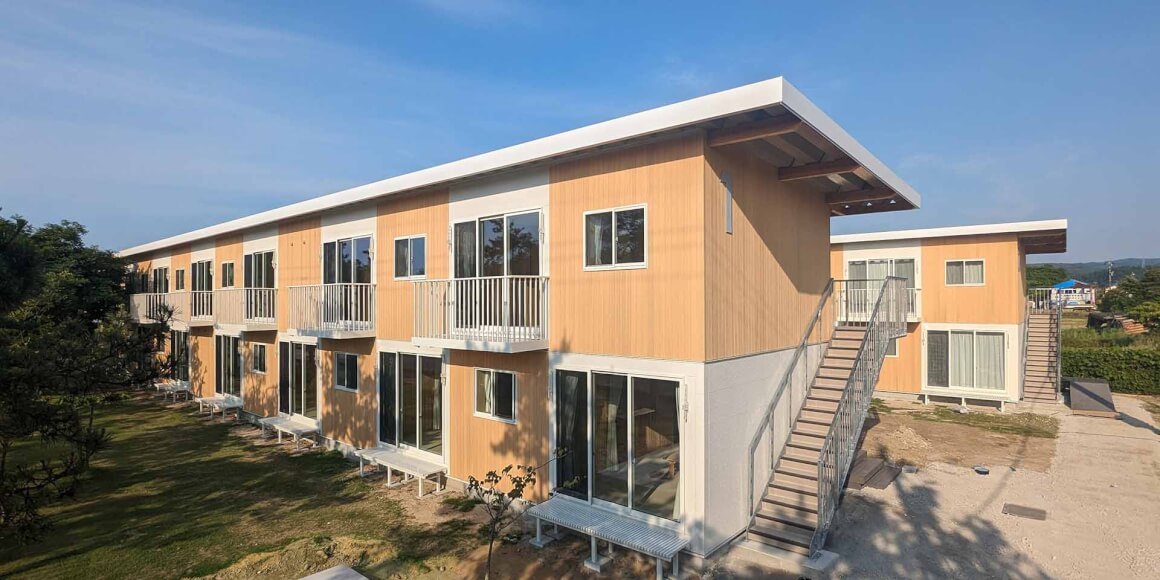
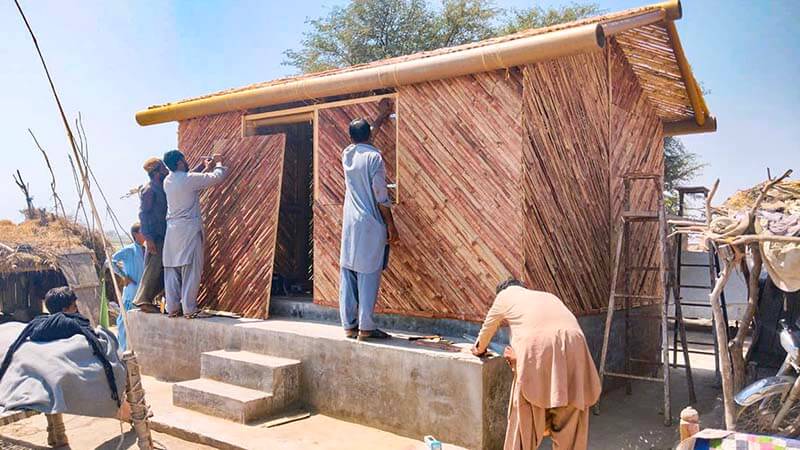
In 2025, his Low-Cost Housing for the 2022 Pakistan floods was successfully completed with the construction of two PLH structures per his revised design and discussions in the Dadu District of the Sindh province—one of the worst affected districts from the 2022 floods.
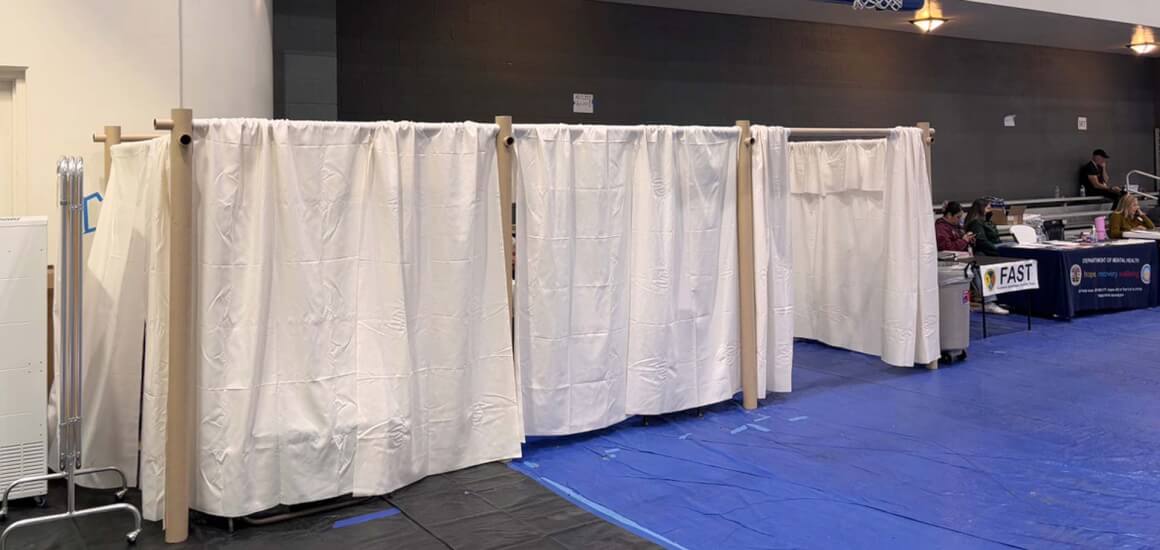
Also in 2025, three units of the Paper Partition System (PPS) were installed at the Westwood Recreation Center in Santa Monica, California—one of the shelters for the people affected by the wildfires that occurred in western Los Angeles on January 7–8, 2025.
By setting up the PPS around the Red Cross medical area called the “medical bay,” a space was designed to ensure privacy for both the medical staff and the people receiving care.
Local California architects Akiko Suzuki, Montalba Architects, Hiro Kamizono, and RIOS have assisted VAN and continue to provide support going forward.
“Though it is central to my practice, I find humanitarian work to be disappointingly uncommon among architects,” states Mr. Ban.
“Early in my career, I was focused on learning the profession, but after about 10 years, I concluded that architects are not always very useful to society.”
“Grand monuments and public buildings may inspire awe or demonstrate the power and wealth of the people or governments that commissioned them, but those structures have little impact on most peoples’ lives.”
“Disasters are a moment of reckoning: They expose our values, our vulnerabilities, and our capacity to respond. I believe it is a natural extension of our work for architects to help people in disaster areas. It is not special.”
“Mr. Ban’s humanitarian efforts and his work have been nothing short of Olympian heroic,” adds Narkiewicz-Laine.
Established in 1994, The American Prize for Architecture is given to an outstanding office and/or practitioner in the United States who have emblazoned a new direction in the history of American Architecture with talent, vision, and commitment and has demonstrated consistent contributions to humanity through the built environment and through the art of architecture.
The Prize, organized jointly by two public institutions, The Chicago Athenaeum and The European Centre for Architecture Art Design and Urban Studies, honors American architects, as well as other global architects practicing on multiple of continents, whose body of architectural work, over time, exemplifies superior design and humanist ideals.
Previous Laureates include: Sir Norman Foster, Michael Graves, the General Services Administration, Richard Meier, Adrian Smith + Gordon Gill Architecture, Form4Architecture, Kohn Pedersen Fox Associates PC., Bernardo Fort-Brescia and Laurinda Spear of the Miami-based firm of Arquitectonica, Eric Owen Moss, Victor F. “Trey” Trahan of Trahan Architects, SHoP Architects, and Chad Oppenheim.
In 2024, the Prize was awarded to Sang Dae Lee of UnitedLAB.
Born in Tokyo in 1957, Shigeru Ban studied at the Southern California Institute of Architecture. Later he went to Cooper Union’s School of Architecture where he studied under John Hejduk and graduated in 1984. From Hejduk, he was inspired by “architectonic poetics” or the creation of “three-dimensional poetry,” which left a lasting impression on Mr. Ban. His formal explorations with basic building materials helped to lead him into unique structural solutions.
Mr. Ban has received nearly 50 awards including the Pritzker Architecture Prize (2014); a Royal Institute of British Architects Award for his Centre Pompidou-Metz museum in Metz, France (2012); the Auguste Perret Prize of the International Union of Architects (2011); and the Architecture Institute of Japan’s Grand Prize (2009) for his Nicolas G. Hayek Center, the new headquarters for Swatch Group Japan.
In 2010, he was awarded membership into France’s Order of Arts and Letters, followed by an invitation to the National Order of Merit in 2011. Ban has received several honorary degrees and fellowships, including Doctorates at Amherst College and the Technical University of Munich and fellowships from the Royal Architectural Institute of Canada and the American Institute of Architects.
In 2001, Time magazine named him “Innovator of the Year.”
Since founding his first office in Tokyo in 1985 and later expanding to New York and Paris, he has undertaken projects that range from minimal dwellings, experimental houses and housing, to museums, exhibition pavilions, conference and concert venues, and office buildings.
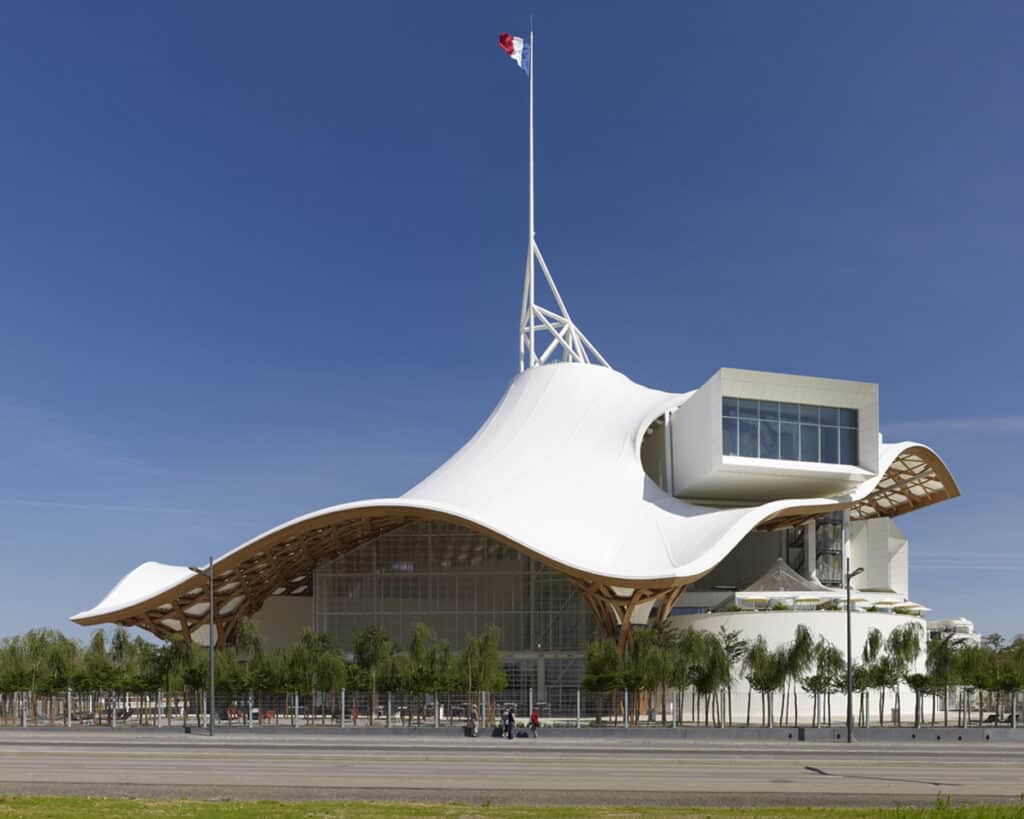
One of the first notable works by the architect was the design for an annex for the Pompidou Centre in Paris for the City of Metz, which was completed as a complex to include a new art museum and theatre.
Finished in 2010, the Pompidou Metz center quickly became an architectural icon, not only for the city of Metz, but also for the region and even the country. Given the large number of visitors to the Museum and the restaurant, the need for more inside eating space on the terrace soon became apparent.
Working with a team of architects including Collectif Studiolada, Balmond Studio, Jean de Gastines Architectes, Shigeru Ban came up with a stunning new vision for the museum.
“My first thoughts when beginning the design were two recent phenomena concerning art museums throughout the world today. The first trend, which has become widely known as the ‘Bilbao Effect,’ was born from the Guggenheim Museum in Bilbao, Spain by architect Frank Gehry,” states Mr. Ban.
Here, the building’s roof is stretched to adapt to a pattern of hexagons and triangles, reducing the number of ribs.
The wood beams are superimposed, so the geometry of the joints is simplified. The complex functions as a continuous shell that takes on the traction and compression efforts.
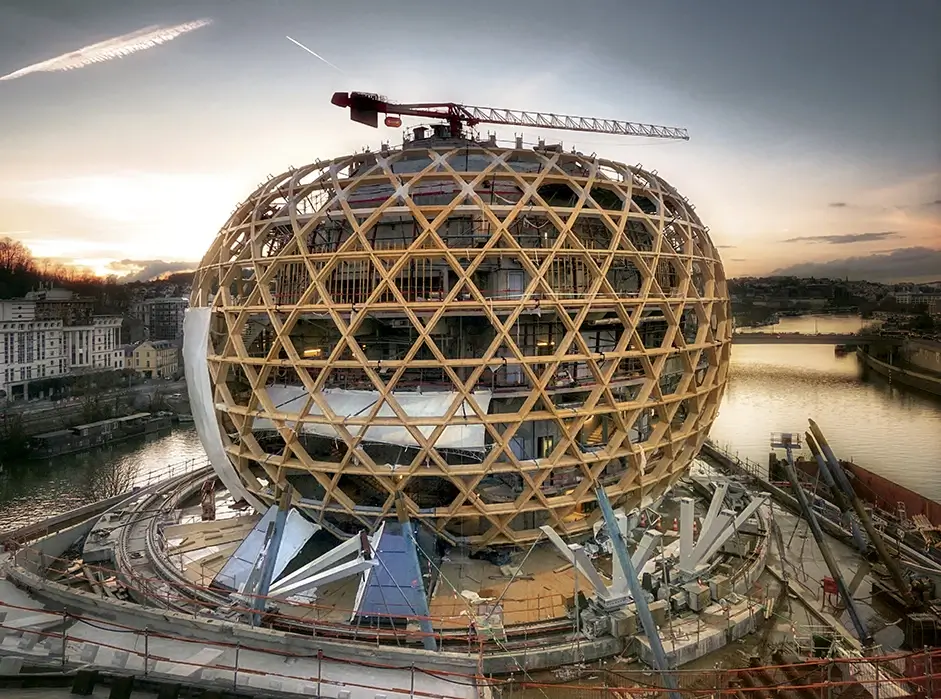
For La Seine Musicale, Boulogne-Billancourt (2014-2017), another key work, Mr. Ban devised a large glass spheroid at the end of Seguin Island, by the River Seine, marking a new cultural landmark west of the metropolitan area of Paris.
These grounds, birthplace of the automobile industry in France, were transformed into the flagship of an area known as the Valley of Culture within a master plan developed by Jean Nouvel.
A concrete plinth, which adapts to the geometric limit of the island, contained the whole program of this center for music except for the concert hall that emerged within the glazed geodesic structure.
On top of a circular system of rails, a large sail formed by photovoltaic panels changes position throughout the day to capture and control sunlight.
To emphasize its public character, the building is permeable and the roof is accessible through two large staircases located at the ends.
Up high, a series of paths cross the green roof, with views of the Seine’s shores.
The linear character of the environment is transferred to the building’s interior, by means of a longitudinal street that gives access to the different areas: lobby, multifunctional hall, auditorium, recording studios, classrooms, offices, restaurants, and shops.

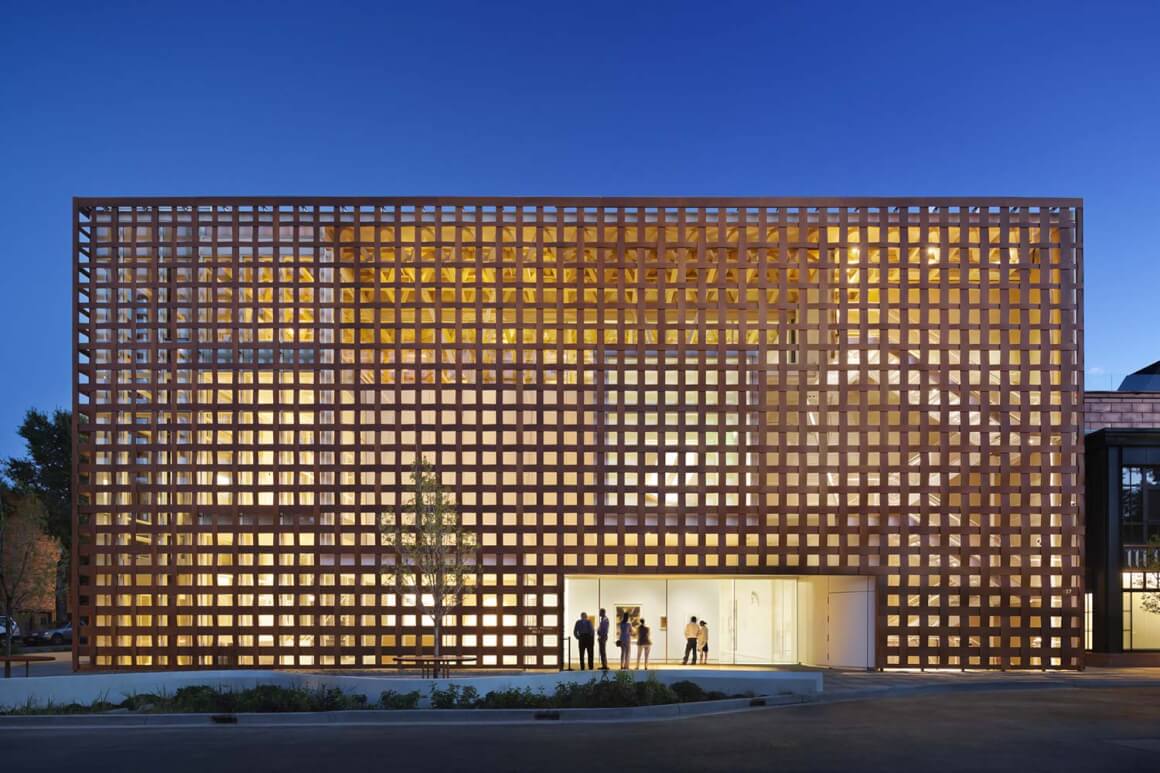
Mr. Ban’s building for the Aspen Art Museum (2014), designed with the local firm of Cottle Carr Yaw Architects, sits on one of the geological formations that characterize the area and is surrounded by a succession of crests colonized by clusters of constructions thanks to their natural beauty and their being possible sites for skiing.
Located in the center of the high mountain town of Aspen, Colorado, on a prominent downtown corner site, the building is a hybrid structure of concrete, steel, and wood, the 3,000-square-meter building replaces the power plant that harbored the old museum.
It is a construction well integrated into its environment whose texture and color of its facade, a fabric of wooden strips, imitates the buildings of brick masonry that surround it, and produces tricky effects.
So while from afar the building looks like a hermetic monolith, getting closer to it enables one to see through the gaps of the skin and appreciate the qualities of the interior, which takes on protagonism when lit at night.
The three story “kunsthalle” provides galleries on the first two floors above ground level and on one floor below.
The third floor is a multi-functional space and café and half of the third-floor area is given over to an outdoor terrace with views up to the mountains.

Mr. Ban’s design features include an innovative long-span timber space-frame roof structure, woven wood panel façade, structural glass floors for gallery day-lighting, outdoor gallery stair which connects the site plaza to the third-floor roof level, and a glass elevator.
“In any design, I always strive for a unified relationship between the structure and its surroundings, states the architect, “the design for the new AAM is a very exciting opportunity to create a harmony between Aspen’s existing architecture and the surrounding beauty of the natural landscape.”
The Aspen Art Museum received a 2015 American Architecture Award from The Chicago Athenaeum.
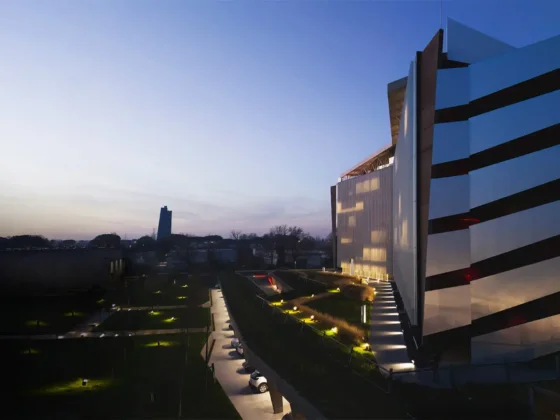
Shigeru Ban Architects also designed the Swatch/ Omega Campus, Swatch Headquarters (2019) in Biel/Bienne, Switzerland as one of the world’s largest timber structures. The shimmering, curved silhouette of the new Swatch building extends over a total length of 240 meters and a width of 35 meters. At its highest point, the façade measures 27 meters.
The unusual, graceful design breaks with the conventions of classic office building architecture and blends harmoniously into the urban environment.
Only timber from Swiss forests–mainly spruce–was used in the construction. A total of just under 1,997 cubic meters of this was needed, a quantity that regrows in the Swiss forest in less than two hours. The traditional material was chosen for its ecological and sustainable properties.

“Mr. Ban’s building form awakens the imagination–like a work of art, where the interpretation of beauty lies strictly in the eye of the beholder.” Narkiewicz-Laine continues.
A more recent, stunning accomplishment by Shigeru Ban is the new Toyota City Museum (2024) constructed on a site adjacent to the Toyota Municipal Museum of Art, which was completed by Yoshio Taniguchi in 1995 and stands as a new institution for the city in Aichi Prefecture.
The new structure, built parallel to the art museum, echoes the original’s façade and proportions.
The building is partly executed with locally sourced cedar wood. The underside of the entrance porch shows a criss-cross structure representing the emblem of Toyota City (two superposed arrows shaping a “V”).
When light shines through this circular opening at noon during summer solstice, the wooden beams cast a shadow on the floor that forms the city’s symbol.
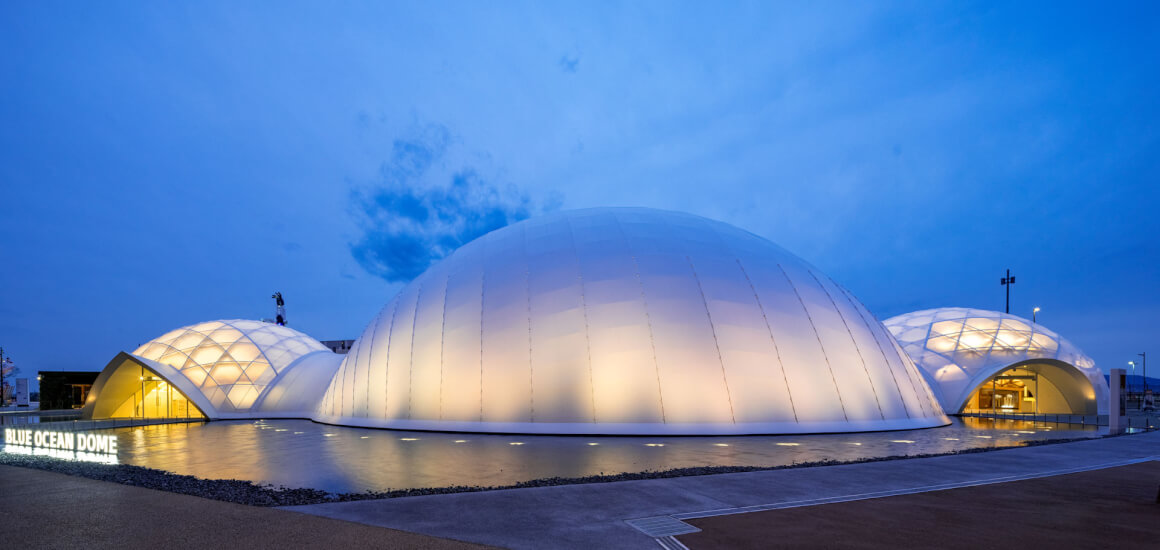
This year, Mr. Ban has opened his stunning Blue Ocean Dome in Osaka (2025) for the Osaka Expo 2025 with its laminated bamboo structure, carbon fiber reinforced plastic, and paper tube structures.
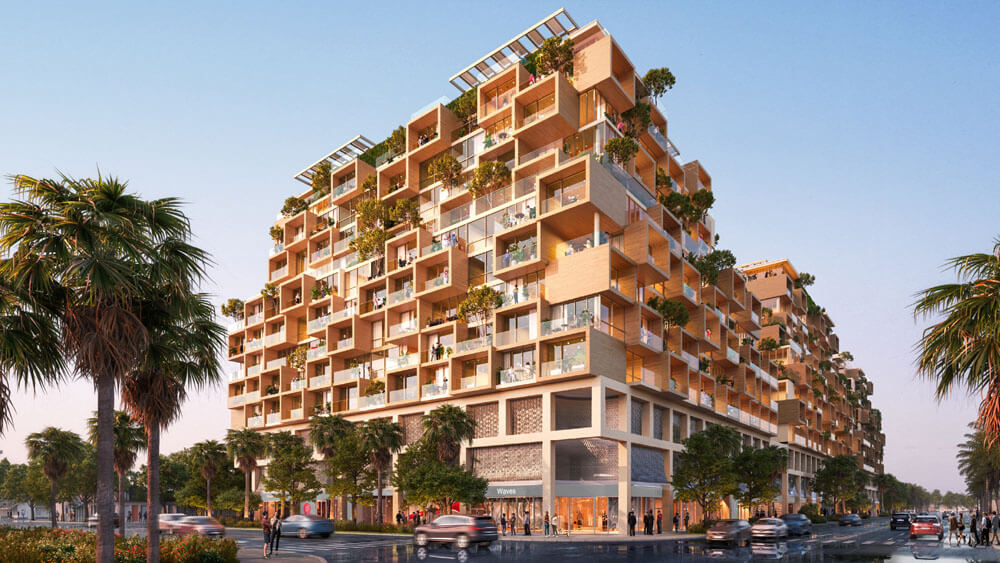
Also in 2025, the architect won a Future House Award from Global Design News for his stunning 12-story condominium project dubbed “HOUSE by Shigeru Ban” to be built on a 2.86-acre site in the community-rich neighborhood of Buena Vista in Miami—minutes away from the Design District and Wynwood.
The façade elegantly showcases the architect’s biophilic design vision by maximizing the use of natural materials and green landscaping throughout the interior and exterior of the building.
“This may be some of my most recognized work, but it should not be an anomaly in my profession,” states the humble architect.
“We architects have an obligation to use our skills to improve the quality of life for all people.”
For all these reasons, Shigeru Ban is the 2025 American Architecture Prize Laureate.
The official ceremony for The American Prize for Architecture takes place at a Gala Reception/Dinner during Art Basel that also honors the recipients of the 2025 American Architecture Awards on Thursday, December 11 at The Arts Club of Chicago (201 East Ontario Street, Chicago, Illinois).
Tickets are available by calling The Chicago Athenaeum at +815/777-4444 or by email at jennifer@chicagoathenaeum.org.
Shigeru Ban’s recent work and nearly 200 winning projects from the 2025 American Architecture Awards are published as a catalogue for Global Design + Urbanism XXV (“New American Architecture”) edited by Christian Narkiewicz-Laine for Metropolitan Arts Press Ltd.
The catalogue is available through The European Centre by email konstadina@europeanarch.eu and at www.metropolitanartspress.com/ .