Forlì, Emilia-Romagna, Italy
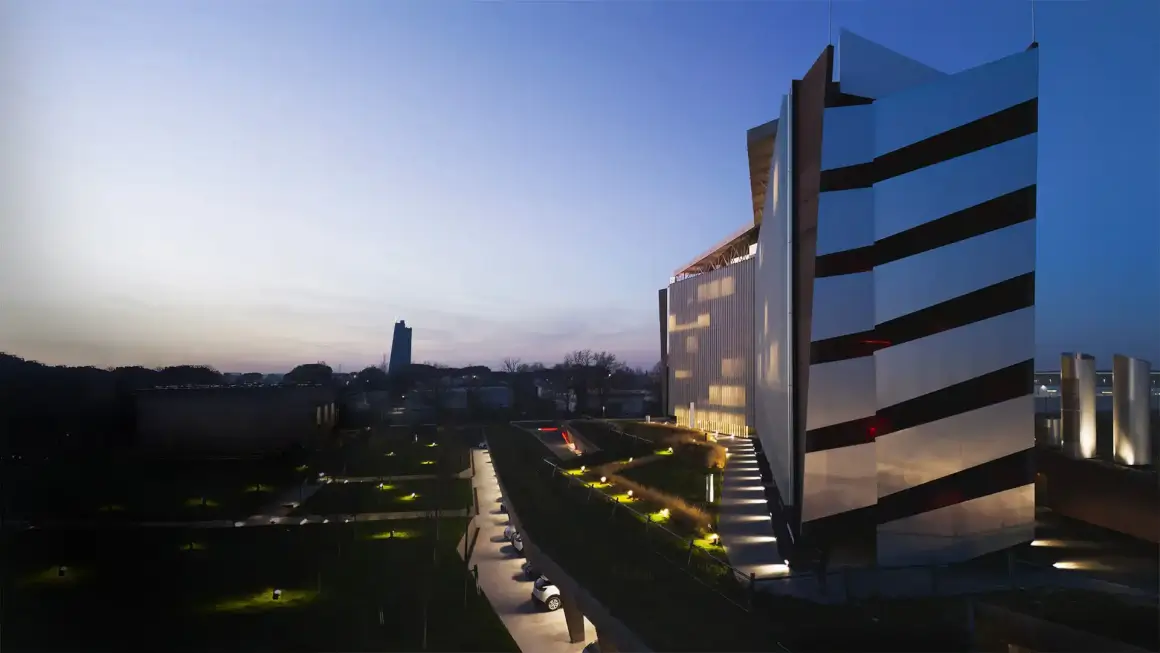
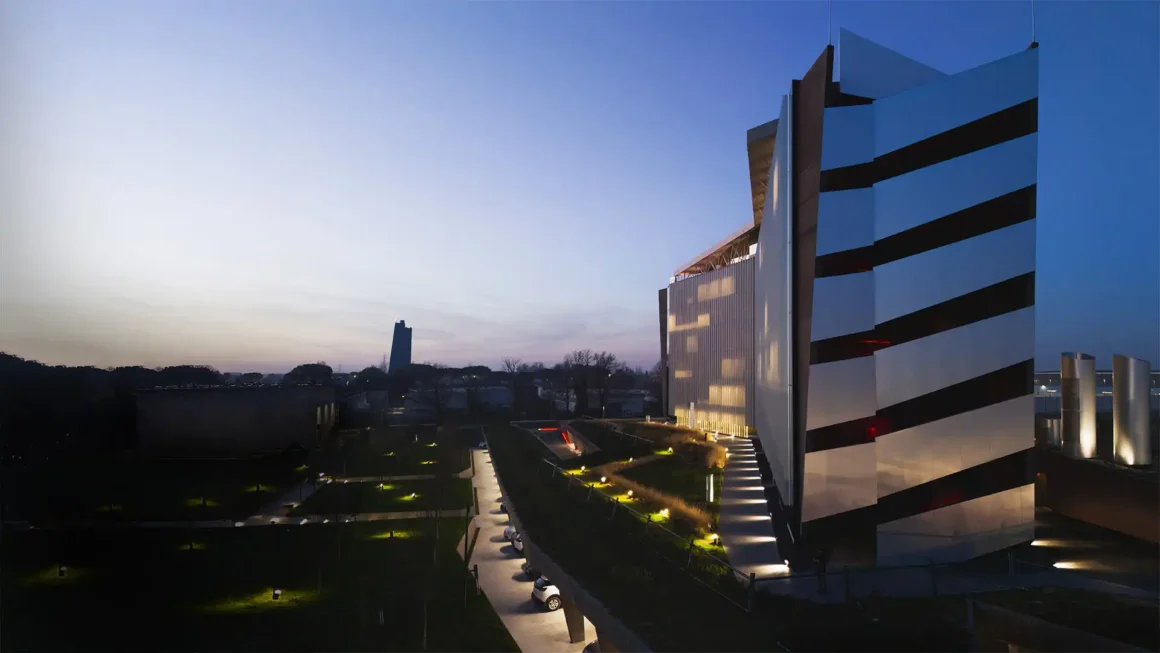
The Sidera building is situated on the outskirts of the city of Forlì (Northern Italy), within an industrial zone dominated by a monotonous parade of prefabricated warehouses. It had to comply with the rigid and mandatory functional brief presented by the cooperative.
The Sidera building by tissellistudioarchitetti, won an 2025 International Architecture Award from The Chicago Athenaeum: Museum of Architecture and Design.
From the outset, a conscious decision was made to avoid focusing on structural form in the initial designs, but rather to let the building reveal itself by adapting its lines to the functional and logistical needs imposed. The form that can be appreciated today is the result of a creative process that absorbs the rationality and pragmatism of the cooperative.
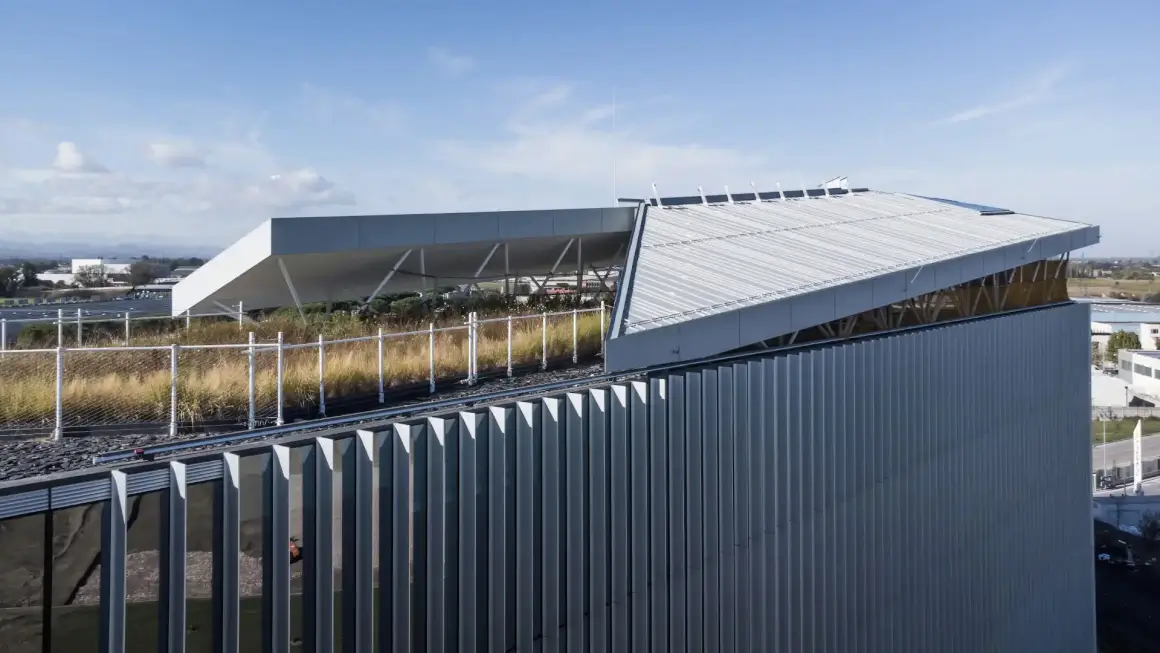
The Sidera building extends horizontally for a length of 100 metres and has a height of 33 metres, starting from a soil plinth that is 3 metres high. The external surface features only three materials: aluminium, black pigmented concrete and glass.

The natural aluminium used for the cladding sheets plays the leading role as it reflects the natural light, taking on different nuances of tone and colour at different times of the day. This, combined with the rapid rhythm created by the placement of the sunshade fins, creates a pleasant optical illusion as one moves around the Sidera building, whereby it appears as either an opaque or transparent block, depending on the position from which it is viewed.
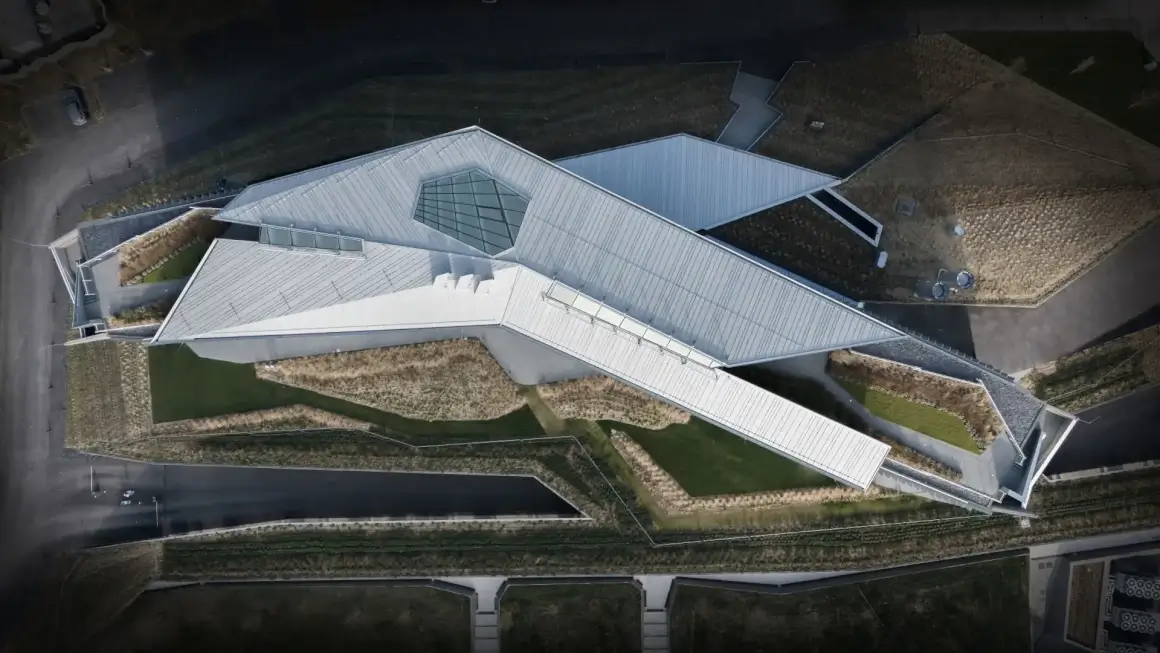
The concept of the envelope of the building does not refer only to the exterior façades, but also includes the roof, which was interpreted as a kind of fifth elevation. The vernacular motif of the pitched roof was selected for this purpose, which, in itself, is unprecedented in such an industrial context. Six sloping pitches are scattered across the space, in order to create a dialogue with the skyline of the nearby Apennines.
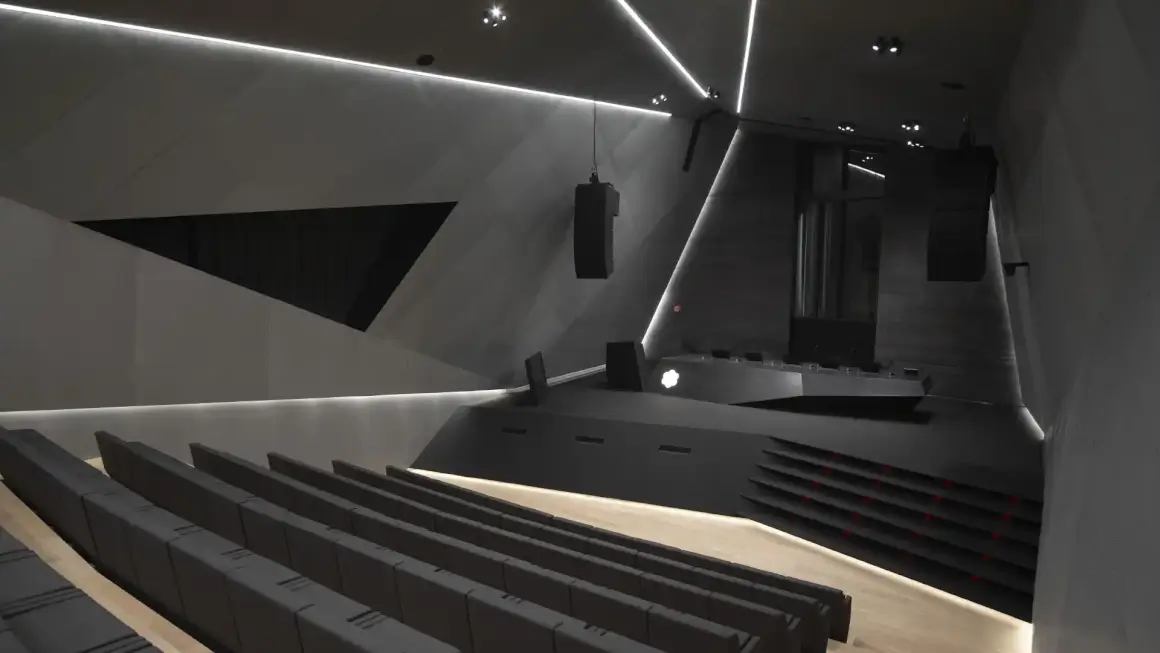
The precepts of neuro-architecture have guided most of the design choices, which focused on finding the ideal working space. Thus, external factors, such as light, air, sounds and visuals, enter the building in the form of calibrated and controlled architectural components.
The glass skin covering the Sidera building controls the inflow of natural light that floods every workspace; the light fixtures follow the 24-hour circadian rhythm; the technology employed for ventilation control and the total absence of openable windows ensure the quality of the air. All these factors guarantee working conditions that foster high levels of psychological well-being, which translates into a higher quality of work.

No colour has been added beyond the natural pigmentation of the materials. Wood, aluminium and concrete proudly express their natural state. The sobriety of the building in this sense reflects the seriousness and pragmatism of the company.
The Sidera building is a living, creative organism that denies the rigid logic of orthogonality. The large internal staircases act as an element of disruption for the entire layout, starting from the fact that it is the only space from which the full internal height of the Sidera building can be enjoyed in all its glory.
The building’s sustainability features are noteworthy, with a 1.2 MW photovoltaic system installed to cover energy needs. Even the decision to surround the headquarters with 300 trees and 22,000 plants is a response to the desire to neutralize the context in which it is built.
In summary, the Sidera building is not just a workplace but a statement of human-centric design and environmental responsibility that embodies the cooperative’s values.
Architects: tissellistudioarchitetti
Lead Architect: Filippo Tisselli
Design Team: Cinzia Mondello, Marcin Dworzynski
Client: CIA CONAD
General Contractor: CMB Carpi
Photographers: Pietro Savorelli and Marcin Dworzynski