Tampere, Finland
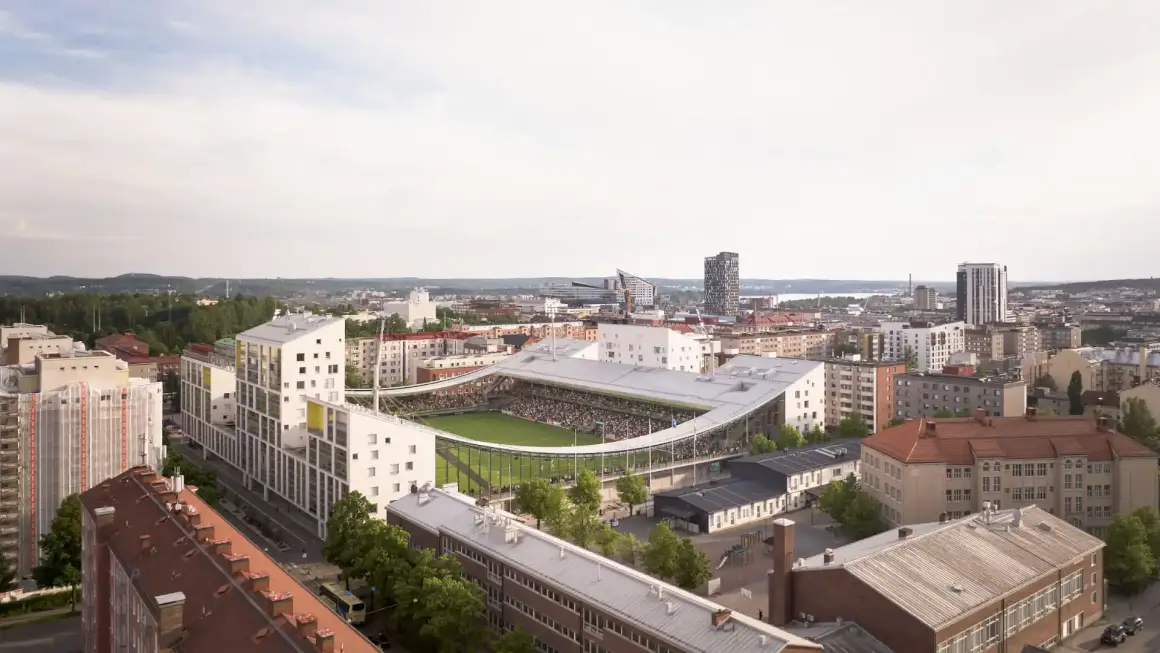
Tammela Stadium, located in Tampere’s Tammela district, is Finland’s first hybrid football stadium, completed in spring 2024. A decade-long collaborative project between the City of Tampere, Pohjola Rakennus, and JKMM Architects, the stadium integrates top-level football facilities with urban living, offering versatile spaces for sports, events, and community engagement.
Tammela Stadium, by JKMM Architects, won an 2025 International Architecture Award from The Chicago Athenaeum: Museum of Architecture and Design.
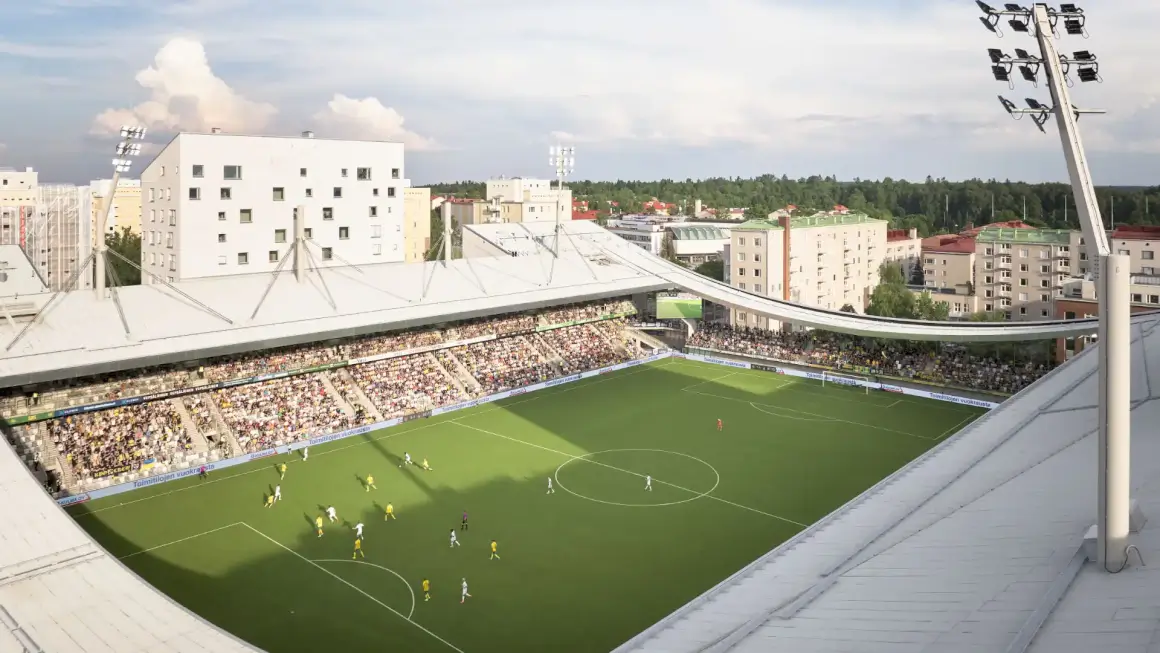
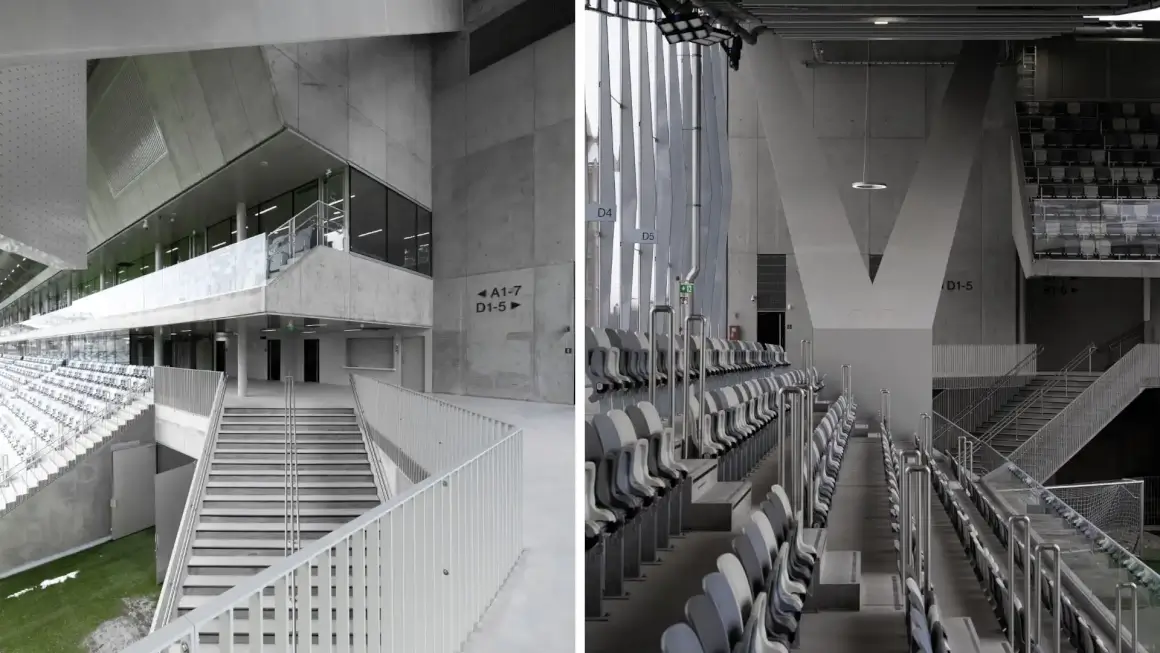
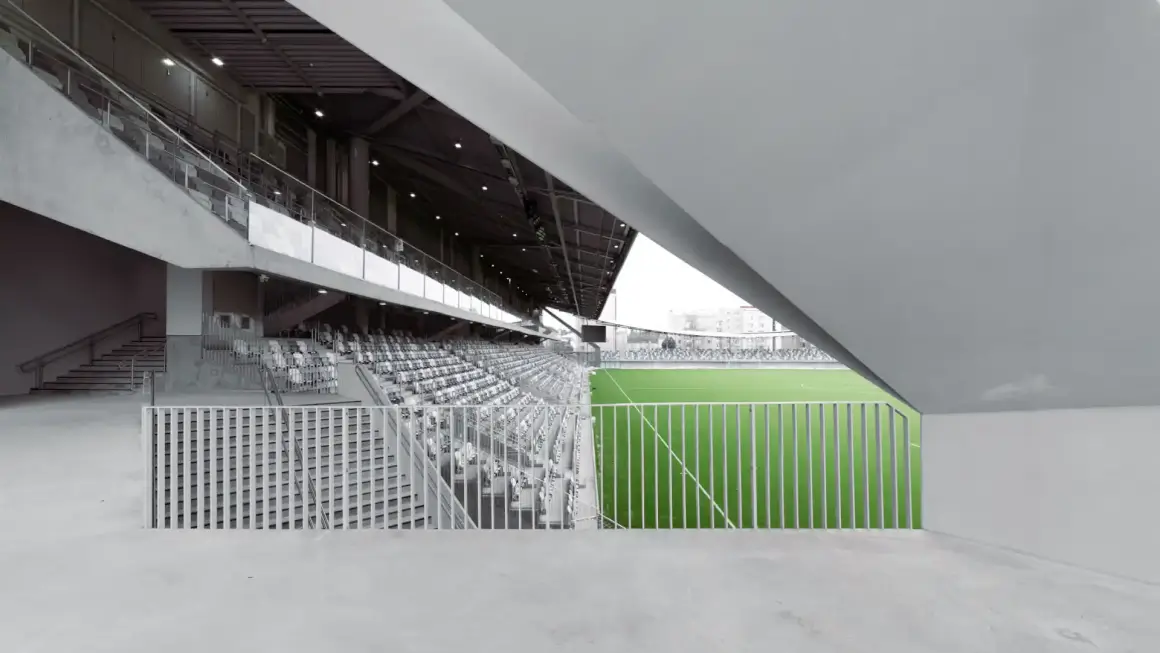
The stadium spans 13,500 square meters and accommodates 8,000 spectators for UEFA Category 4 football matches, including national and international games. It also hosts 15,000 attendees for concerts and other events. Designed with excellent sightlines, the stadium ensures unobstructed views of the field from every seat. In the hybrid block, in addition to the stadium, there are also five residential buildings, a commercial centre, and parking facilities across a total of eight plots. Part of the residential buildings was developed by YIT Suomi Oy. It is part of a nearly 50,000 square meter hybrid block, seamlessly integrated into the urban fabric.
The original Tammela stadium, built in the early 1930s, was among Finland’s first football-specific venues. Despite urban densification, the City of Tampere preserved the stadium’s historical location. JKMM Architects won a 2014 design competition with “Hattutemppu” (Hat Trick), a proposal blending urban design and architectural innovation while respecting the area’s character.
The stadium’s most striking feature is its arched roof, extending east to west, with suspended steel canopies that merge with the residential buildings. The structure minimizes shadows on the field and maintains spatial harmony with its surroundings. Brick-clad residential buildings frame the long sides of the stadium, their elevated courtyards integrating private and public spaces.
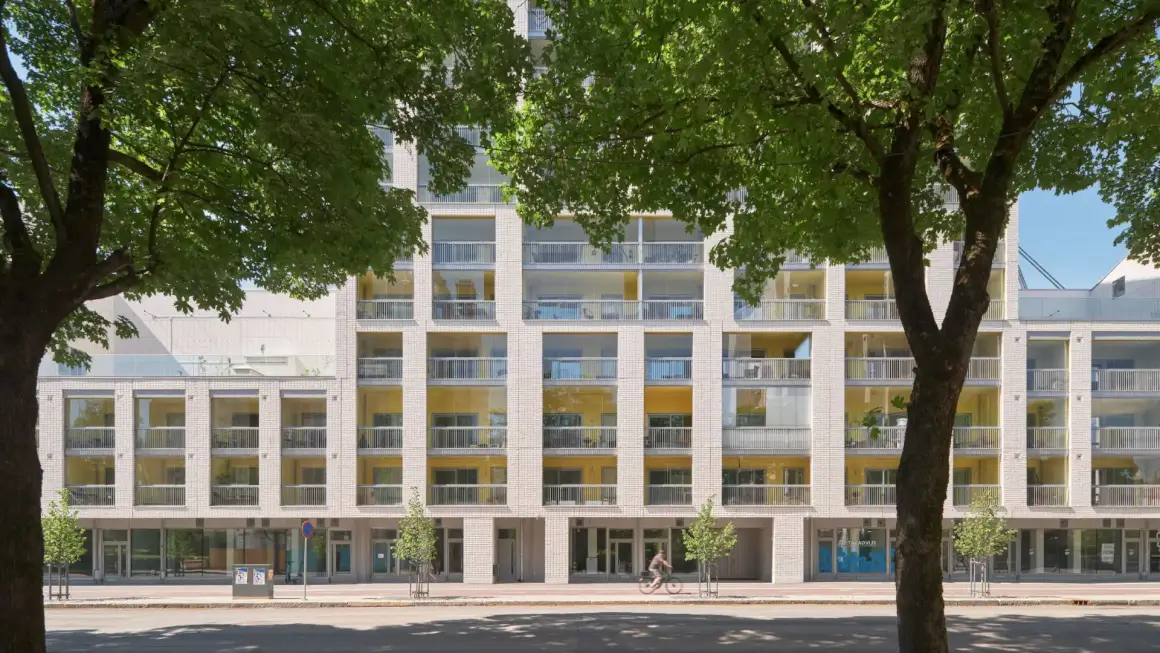
Entrances are designed for seamless accessibility, with public access at the block’s corners, separate entrances for teams and VIP guests, and provisions for maintenance and commercial activities. The roof’s light-coloured surface reflects light and cleans urban air pollutants, contributing to sustainability.
Located in Tampere’s vibrant urban core, the stadium relies on existing infrastructure and public transport. The project emphasizes sustainable densification, reusing old stadium structures elsewhere in the city. The block is connected to an efficient district heating and cooling network, and its design optimizes materials and energy use.
Tammela Stadium functions as a miniature city, integrating residential, commercial, and public spaces. Ground-level shops and plazas enhance the neighbourhood’s vitality, while its compact design ensures urban connectivity. The versatile block hosts a range of events, serving both residents and visitors.
The stadium’s architecture is marked by tectonic design principles, where structural elements serve both functional and aesthetic purposes. Key components include:

The stadium’s architecture is marked by tectonic design principles, where structural elements serve both functional and aesthetic purposes. Steel composite pillars with reinforced concrete bases support canopy loads while protecting residential buildings from stress. WQ beams, reinforced concrete elements, and hollow-core slabs in the beams and floors provide structural integrity and flexibility. End canopies feature suspended steel structures supported by cables and reinforced concrete anchorages, allowing for movement and load distribution. Glass walls are engineered for lateral and vertical movement to accommodate canopy flexing under uneven loads. The roof’s light-coloured cladding and movement joints ensure durability and sustainability.
Tammela Stadium is a landmark that enriches Tampere’s urban landscape, combining football culture, sustainable design, and multifunctional spaces. It seamlessly integrates into the city’s block structure, offering a vibrant hub for sports, entertainment, and community life.
Architects: JKMM Architects
Design Team: Samuli Miettinen, Asmo Jaaksi, Teemu Kurkela, Juha Mäki-Jyllilä, Alli Bur, Harri Koski, Kristian Forsberg, Sami Laine, Henri Olsbo, Hannu Rytky, Hannele Eriksson-Anttilainen, Salla Oikkonen, Tuomo Toivola, Tommi Varis, Joonas Väkiparta, Reetta Aarnio, Sini Coker, Riikka Heldan, Tristan Hughes, Helmi Häkkinen, Kimmo Kirvesmäki, Katariina Knuuti, Katariina Kosonen, Tatu Laakso, Kaisa Laiho, Veera Luostarinen, Jenni Malskis, Lars-Erik Mattila, Kirsi Meloni, Jaana Miettinen, Elina Niemi, Marko Pulli, Edgars Racins, Tuomas Raikamo, Johanna Raukko, Helka Saarinen, Jaakko Saraste, Katariina Takala, Teemu Toivio, Jarno Vesa, Anne Viisteensaari, and Miina Vuorinen
General Contractor: Pohjola Rakennus Oy Suomi and YIT Suomi Oy
Client: City of Tampere
Photographers: Hannu Rytky and Tuomas Uusheimo