Allston, Massachusetts, USA
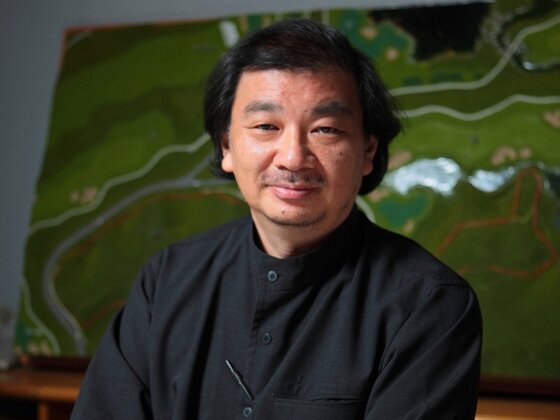
“Reconciling all of these unique requirements into a coherent and singular design was a substantial challenge,’ states Stefan Behnisch.
“Also, to design such a large laboratory building and ensure that it’s environmentally responsible is not easy—the safe and proper ventilation of lab environments is very energy-intensive. you need a very good and dedicated client to achieve this. it is not only about money; it is about dedication to the cause.”
Won in a competition in 2006, Behnisch Architekten’s newly completed Harvard University Science and Engineering Complex sets a new precedent for a high caliber architecture that inspires learning and scientific discovery while showcasing the latest state-of-the-art merits of the future sustainability.
Opened to the public in 2021, the building weaves together a number of threads of contemporary life, which will influence current and future generations of researchers: engineering’s decisive influence on the exploration and resolution of some of the world’s most pressing problems, the critical importance of cross-disciplinary efforts to achieve major scientific breakthroughs and genuine leadership in sustainable design and urban development.
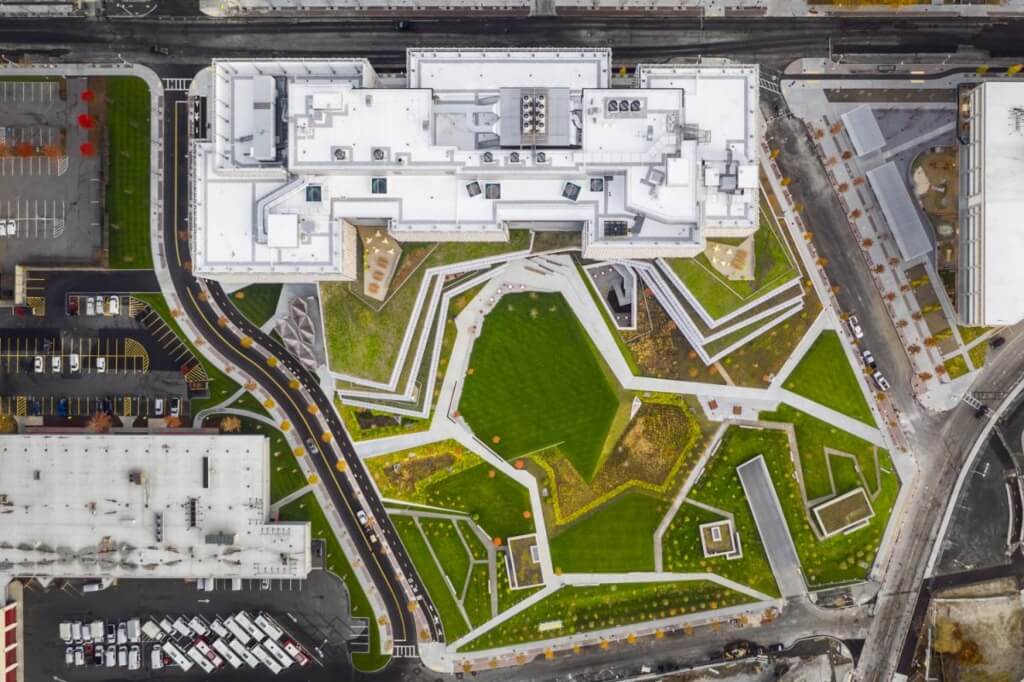
Harvard University Science and Engineering Complex has been awarded a 2022 American Architecture Award and a 2022 Green Good Design Award from The Chicago Athenaeum: Museum of Architecture and Design and The European Centre for Architecture Art Design and Urban Studies.
The building’s adaptable, innovative environments support the school’s profound commitment to cutting-edge academic collaboration, create vibrant public spaces at a variety of scales, and set a distinctive architectural tone for the Allston campus.
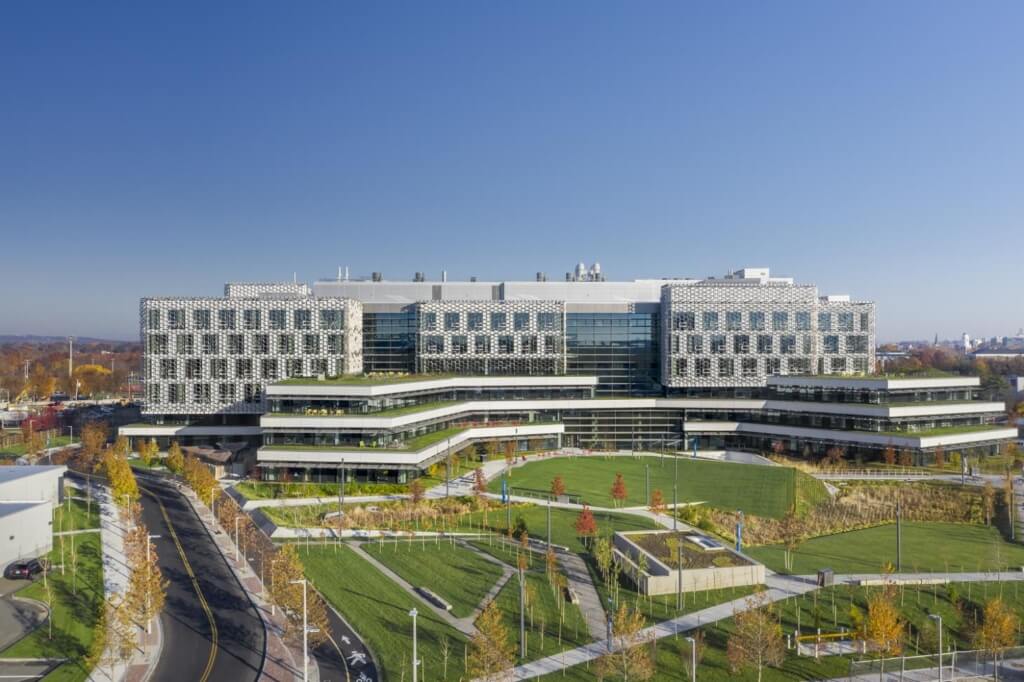
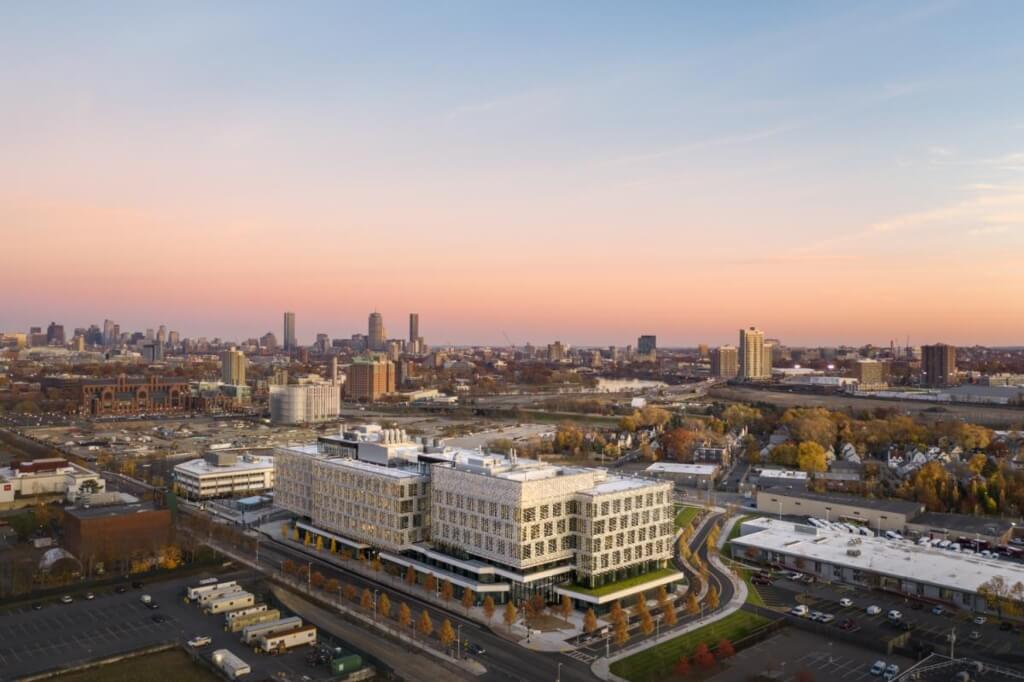
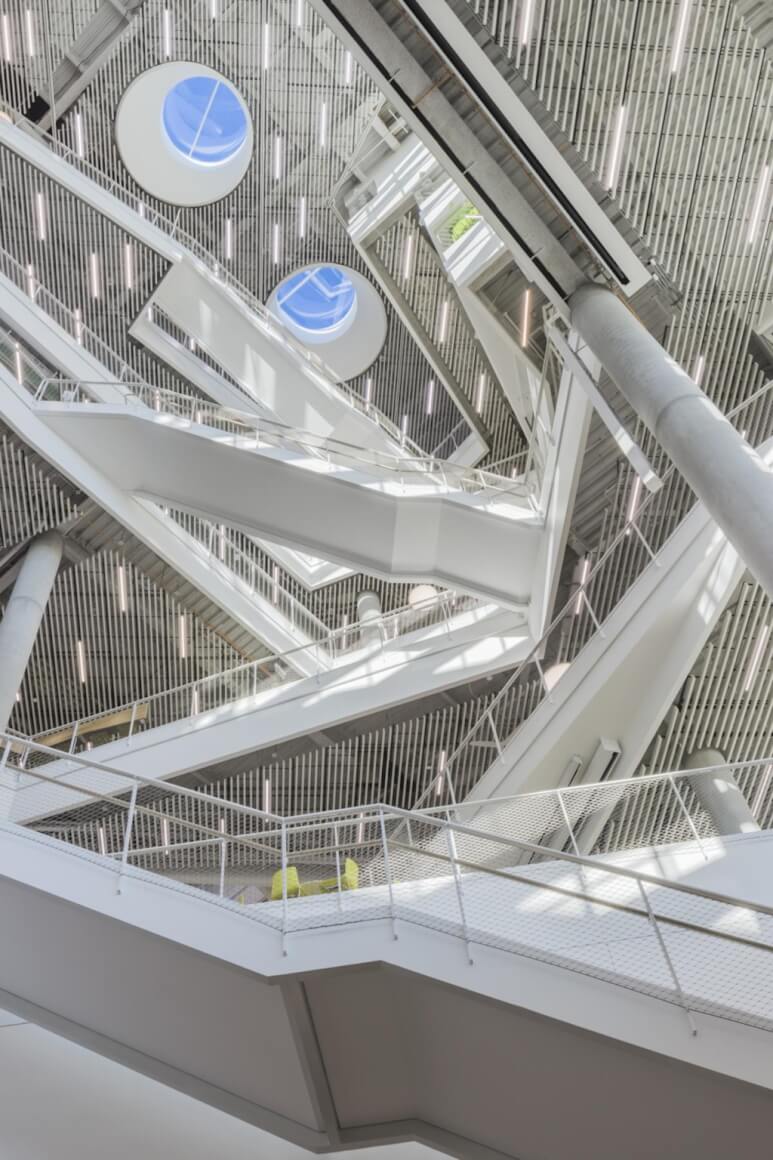
The eight-level, 544,000-square-foot building is organized into three four-story volumes connected by two glazed, multi-story atria that provide light-filled social hubs for faculty and students.
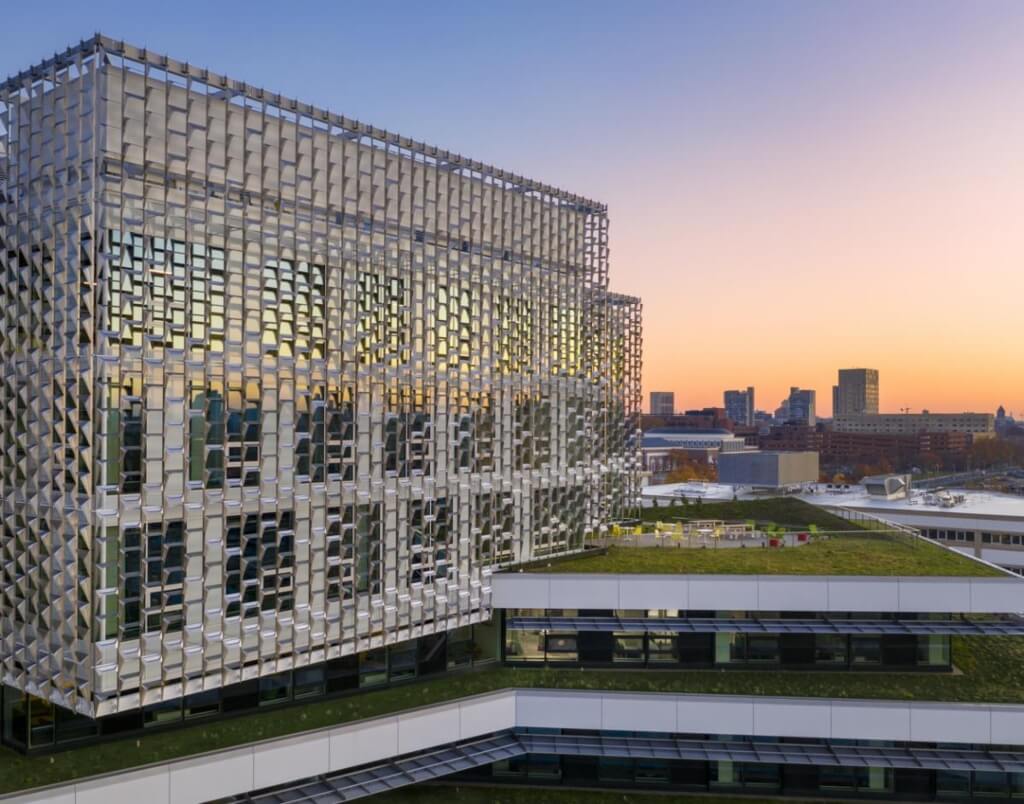
The upper stories are clad in a facade whose layered design celebrates and calibrates the scale of the large volumes that comprise the research activities of the building, creates an identity for the complex, and plays a crucial role in the efficient energy performance of the building as well as occupant comfort.
Classrooms, makerspaces, teaching labs, and amenity spaces occupy the floors closer to the street, where they highlight active learning, showcase student work, and engage the community.
Classrooms and meeting spaces vary in size and layout, ranging from typical, theater-style classrooms with sloped floors and fixed seating to flexible spaces that can be reconfigured into flipped classrooms for student-led discussions.
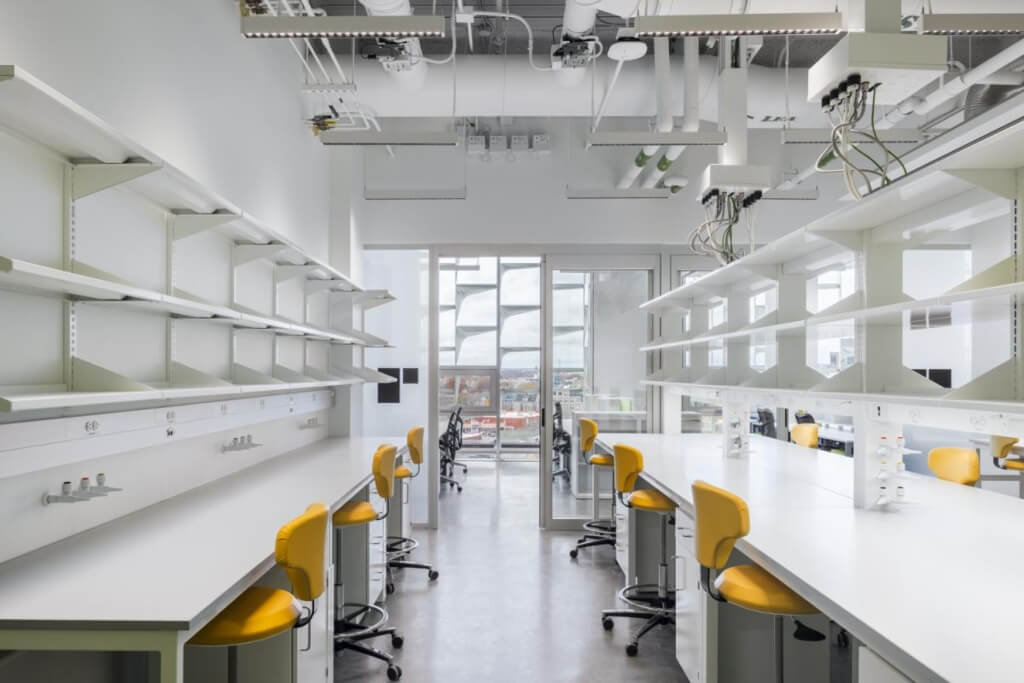
Wet and dry research labs are located in the upper volumes, where they provide researchers with more solitude and security.
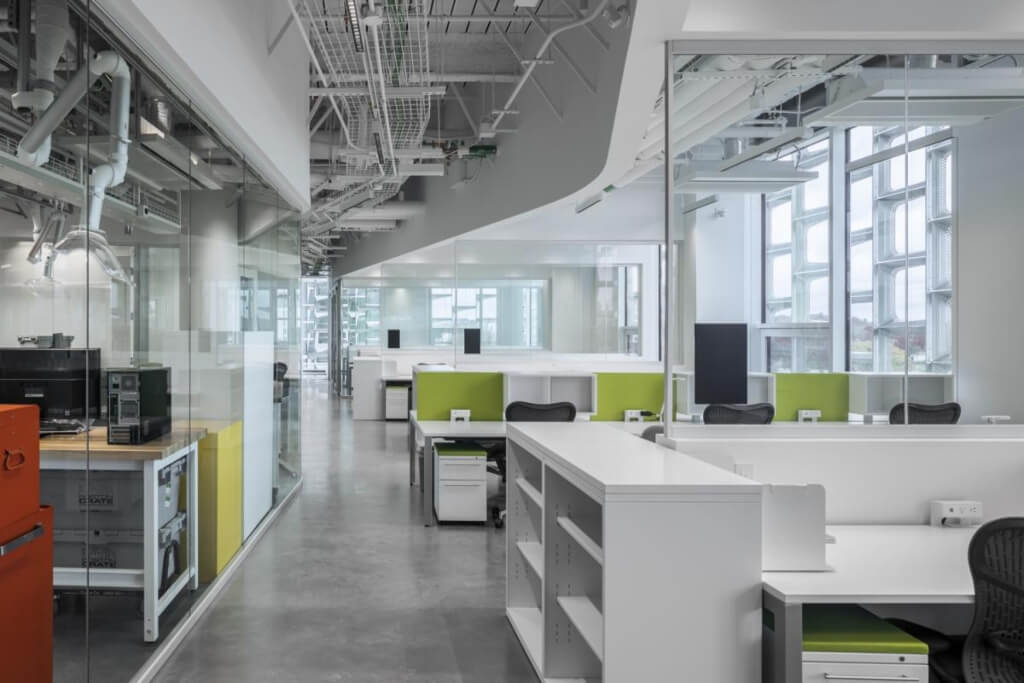
Modular, flexible laboratory environments, smart zoning of highly ventilated zones from dry spaces, and robust delivery of centralized lab services ensure the adaptability of the space for decades to come.
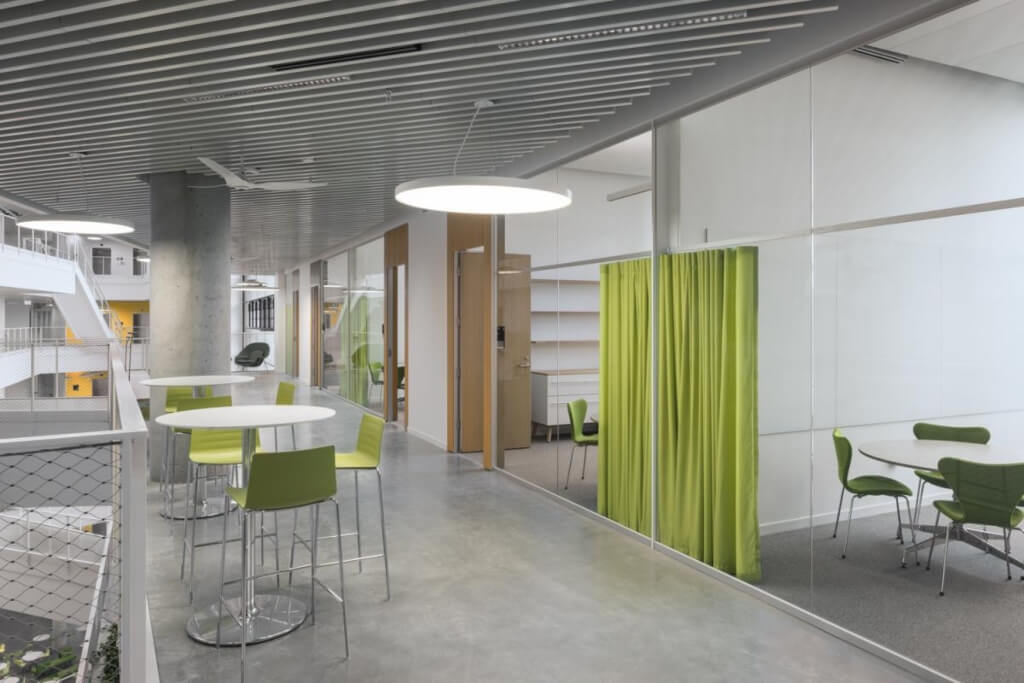
Between the laboratory blocks, generous lounges provide connection points for students and faculty.
Sustainability and performance are high priorities for Harvard. The SEC has been certified LEED Platinum.
Complementing energy-conscious HVAC and lighting systems and vegetated roof terraces, the facade balances technical and aesthetic goals.
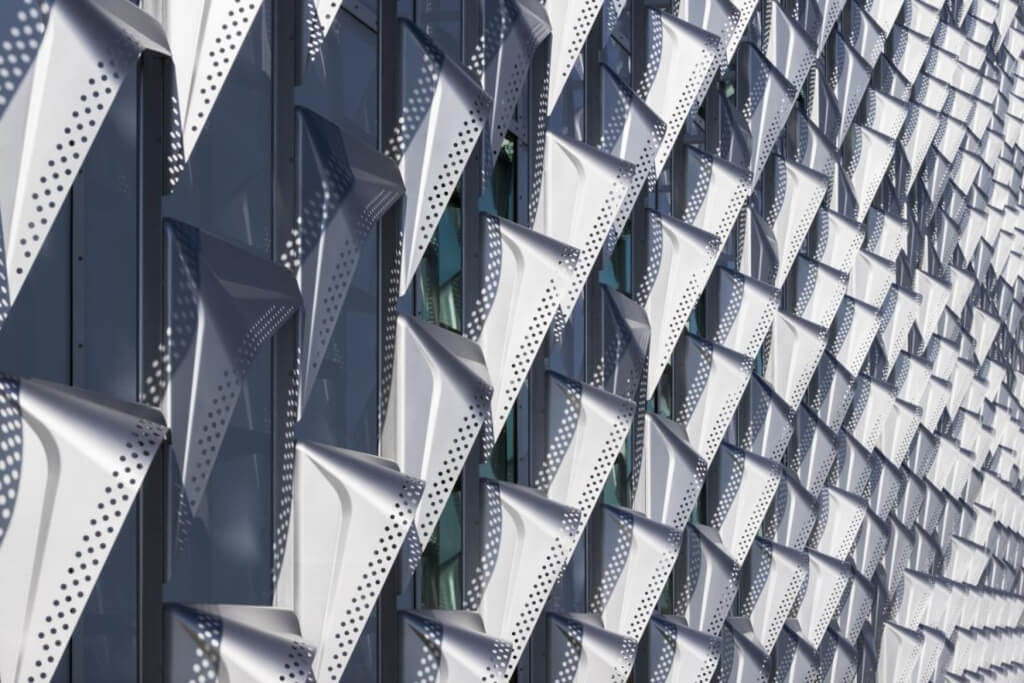
Four principal facade types are used at the building, including the world’s first hydroformed stainless-steel screen, which wraps the laboratory portion of the structure.
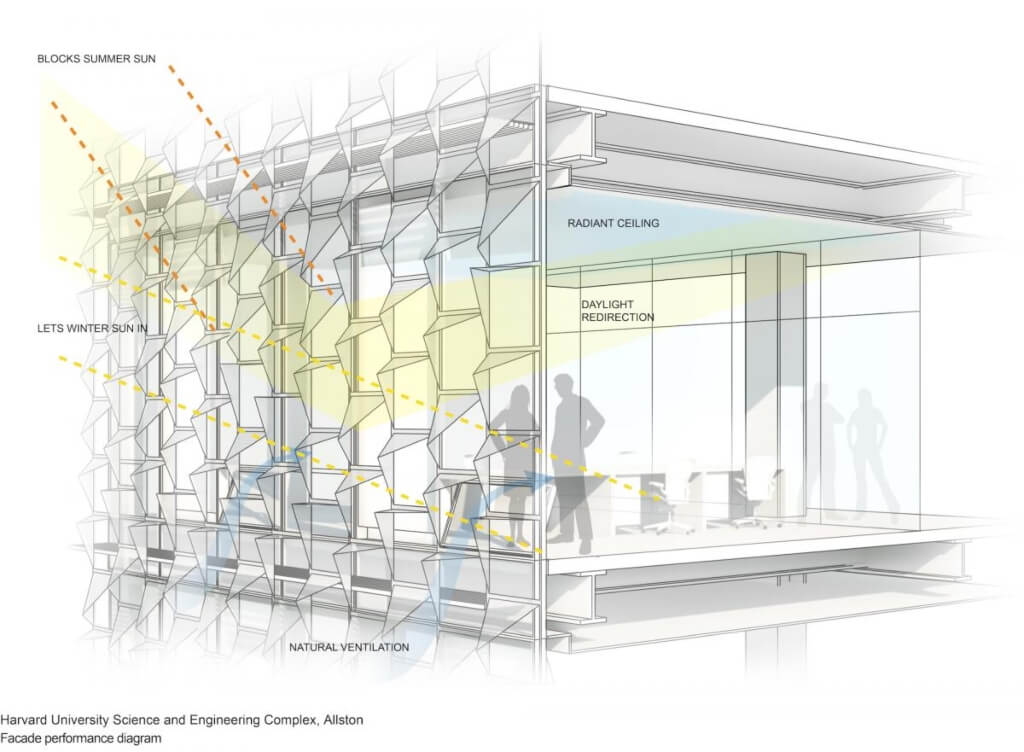
It is precisely dimensioned to shield the interior from solar heat gain during warmer months while admitting beneficial sun during the winter, reducing cooling and heating loads.
The screen also reflects daylight towards the interior while maintaining large view apertures.
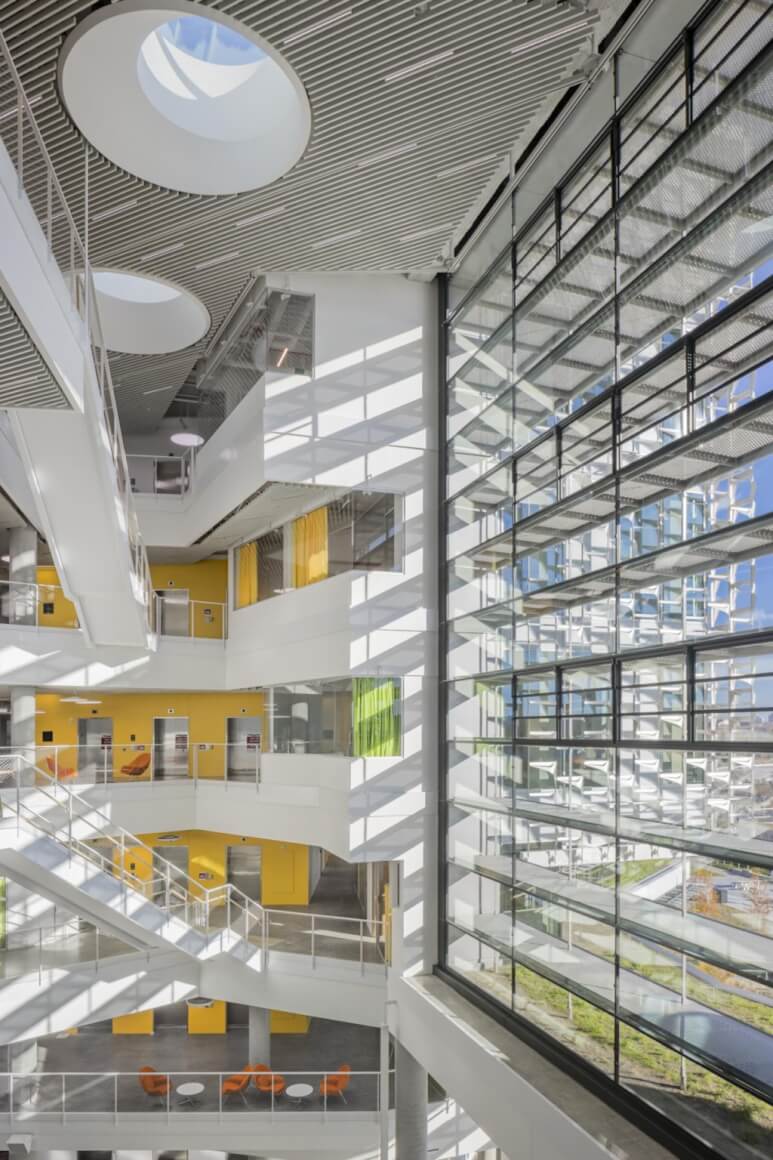
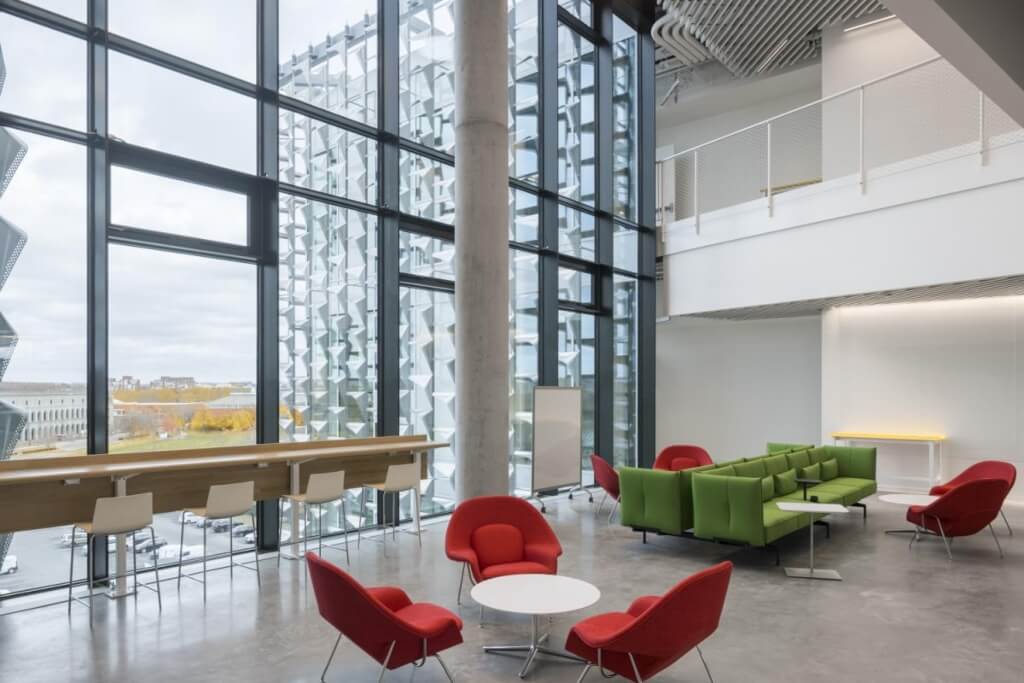
Glazed facade sections feature exterior sunshades and operable windows that support automated natural ventilation.
The SEC’s striking, yet highly functional design will strengthen Harvard’s position as a leader at the intersection of engineering and science and set the standard for the future development on the Allston campus as one of the high-quality learning environments with rigorous sustainability goals.
Project: Harvard University Science and Engineering Complex (SEC)
Architects: Behnisch Architekten
Landscape Architects: Stephen Stimson Associates Landscape Architects
General Contractor: Turner Construction Company
Structural Engineers: Buro Happold
Climate Engineers: Transsolar
LEED Consultants: Thornton Tomasetti
Facade: Knippers Helbig GmbH
Facade Contractor: Josef Gartner GmbH and Permasteelisa North America Corp.
Lighting Design: Bartenbach GmbH and Lam Partners
Laboratory Planning: Jacobs Laboratory Planning Group
Perforated Metal Ceilings: Steel Ceilings
Flush Wood Door and Interior Glazing: Panello and feco-feederle GmbH
Acoustic Ceiling Panels: Rosso Acoustic
Exterior Balance Doors: Dawson Doors
Stainless Steel Mesh: Carl Stahl
Operable Partitions: Hufcor
Client: The President and Fellows of Harvard College
Photographers: Brad Feinknoph and Janius Rozkalns (Video)