Minneapolis, Minnesota, USA

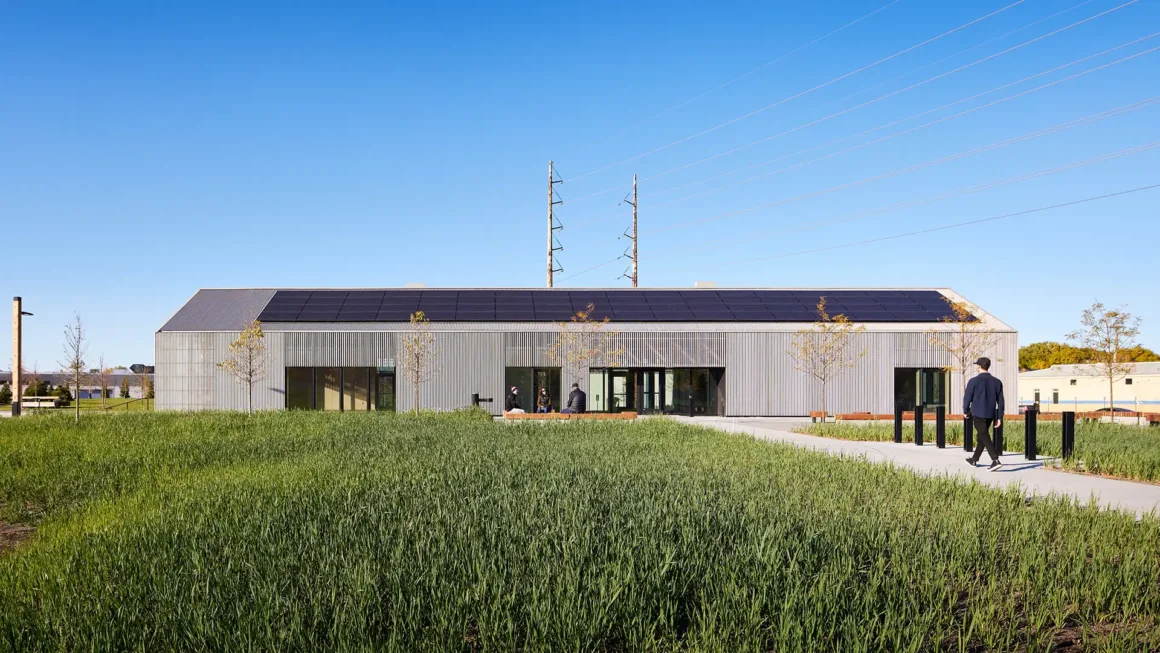
This ground-up multi-purpose building and newly-developed landscape at Graco Park in Minneapolis, situated along the banks of the Mississippi River, reflects a process of interdisciplinary collaboration and sustainable design. The project integrates architecture and landscape through the lens of environmental stewardship, guided by a vision to rejuvenate an industrial relic into a vibrant community nexus. With architecture by Snow Kreilich and landscape architecture by Aune Fernandez, the design was phase two of a larger project.
For the first phase, a channel was dug in the area formerly filled in by industry to restore Hall’s Island. The scope included restored vegetation on the island and reef infrastructure in the channel to support native mussel habitat. The second phase expands on these habitat restoration efforts and strengthens ties to the community, through a building that accommodates various publicly-connected initiatives, and an accessible park that connects to the riverfront.
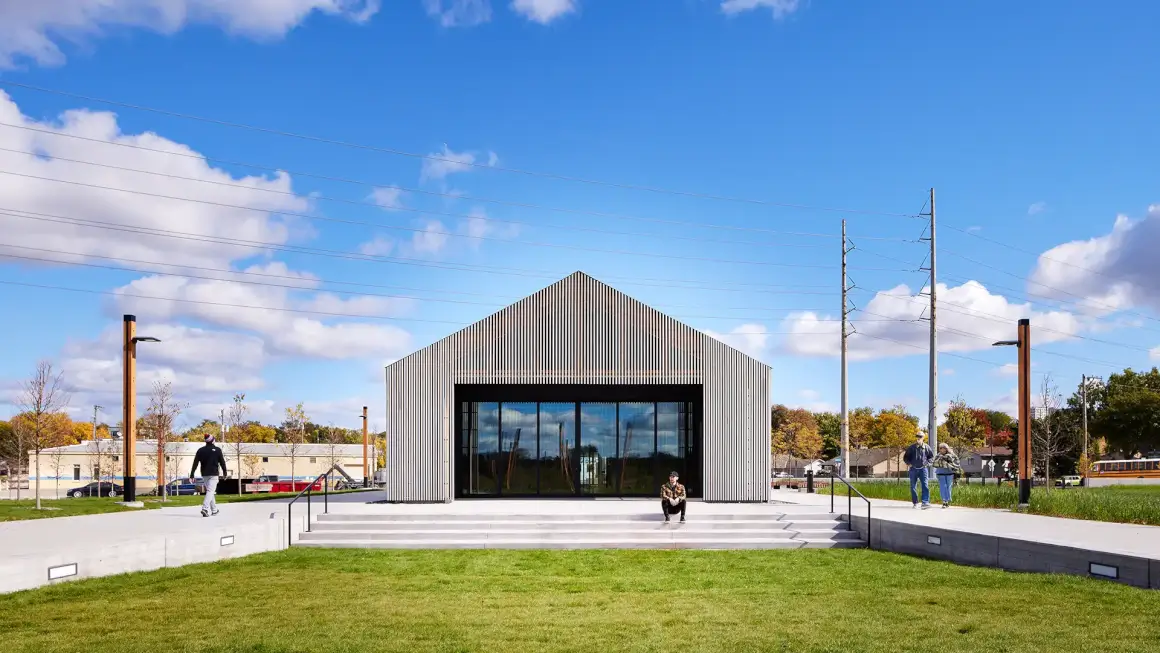
Graco Park by Snow Kreilich Architects, won an American Architecture Award 2025 from The Chicago Athenaeum: Museum of Architecture and Design.
Context and Landscape Integration: The new building on-site, designed by Snow Kreilich, has a multitude of public functions that invite more of the local community to experience Graco Park. Inside, the structure unfolds into three distinct multi-purpose spaces: a dynamic open area adaptable for performances, community meetings, and fitness classes; an expansive lobby conducive to informal gatherings and remote work; and a dedicated space for youth engagement in creativity and technology.
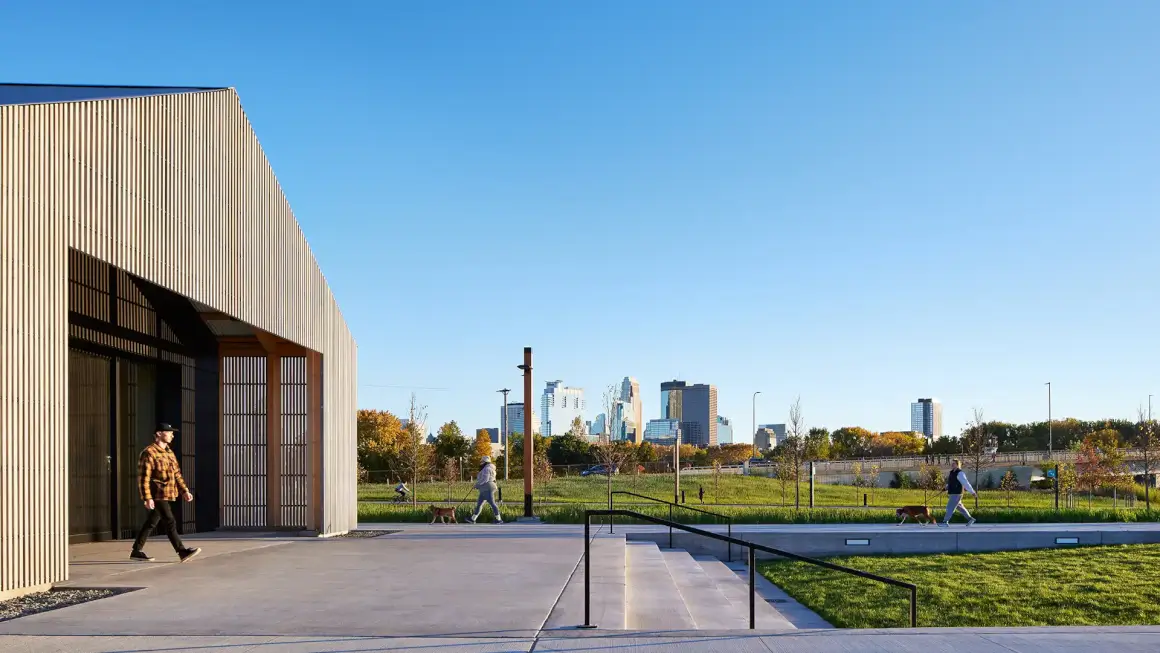
These spaces are complemented by gender-neutral restrooms, storage facilities, and a welcoming front desk, ensuring inclusivity and accessibility for all community members. The design team purposefully rotated the building’s orientation relative to the surrounding street grid to optimize solar exposure, a design decision that enhances energy efficiency and frames picturesque views of the river and surrounding parkland.
The park’s landscape layout, led by Aune Fernandez, strategically evolves from the building’s footprint outward, emphasizing habitat restoration and ecological connectivity. Landscape space defines the park including a tree lined promenade, river walk, ecological bee lawn green, regional trail and performance space. These spaces and pathways offer scenic views and routes for leisurely strolls along the river edge and in the habitat restoration. The culmination of the park design was to celebrate habitat, the Mississippi river and the restoration of Halls Island.


Sustainability and Innovation: Graco Park exemplifies a commitment to sustainability through innovative design strategies and cutting-edge technologies. The building’s envelope features a wood scrim facade that continues over floor-to-ceiling windows, enhancing its aesthetic appeal, while also serving as a passive solar shading device to minimize heat gain in summer. The scrim over windows is limited to the upper third, leaving a clear zone to maximize natural light penetration in winter and provide uninterrupted views.
Building energy use is further minimized through the use of a super-insulated, airtight building envelope and efficient geothermal mechanical system. Remaining loads are offset by a roof-mounted photovoltaic array, resulting in Net Zero operational energy use. This biophilic design approach reduces operational energy demands and fosters a comfortable indoor environment for occupants.

Architects: Snow Kreilich Architects
Design Team: Julie Snow, Mary Springer, Doug Gerlach, Tamer Azzazi, Don Vu, Brad Smith, and Jordan Strickland
General Contractor: Ebert Inc.
Client: Minneapolis Park and Recreation Board
Photographers: Corey Gaffer