Seattle, Washington, USA

Guided by an ethos of interconnectivity and mutual care of the one world ocean, the Seattle Aquarium’s Ocean Pavilion is the latest addition to the Seattle Aquarium’s existing facilities on Piers 59 and 60, expanding the Aquarium’s sustainable campus. The new Ocean Pavilion highlights the connection between people and marine life at home and around the world. Ocean Pavilion also serves as a link to downtown Seattle, Pike Place Market, the newly revitalized central waterfront, Elliot Bay, and the ocean beyond.
Seattle Aquarium Ocean Pavilion by LMN Architects received an 2025 American Architecture Honourable Mention from The Chicago Athenaeum: Museum of Architecture and Design.
The curving pavilion integrates into its complex urban site, which fronts the waterfront pedestrian promenade and connects to Seattle’s iconic Pike Place Market via the City of Seattle’s new Overlook Walk. With the stunning backdrop of the Salish Sea, the building makes an extroverted gesture to the water with sweeping geometries and a series of views connecting visitors to Puget Sound and the ocean beyond. Strategically placed glazing, including an iconic oculus, provides access to the Aquarium for all, providing equitable opportunities for the public to see into the Reef habitat, the approximately 500,000-gallon tropical habitat and the largest tropical habitat in the Pacific Northwest.


Inside, the 50,000-square-foot building is an armature for immersive habitats, ecological experiences, educational spaces, and hands-on exploration. The design also peels back the layers of aquarium experience, inviting visitors to see the back-of-house spaces and mechanical systems alongside curated ocean and city views, which together demonstrates the interplay between human and ocean life. Beginning in One Ocean Hall, the central gathering space, visitors are immersed by powerful 360-degree imagery spotlighting marine ecosystems around the world.
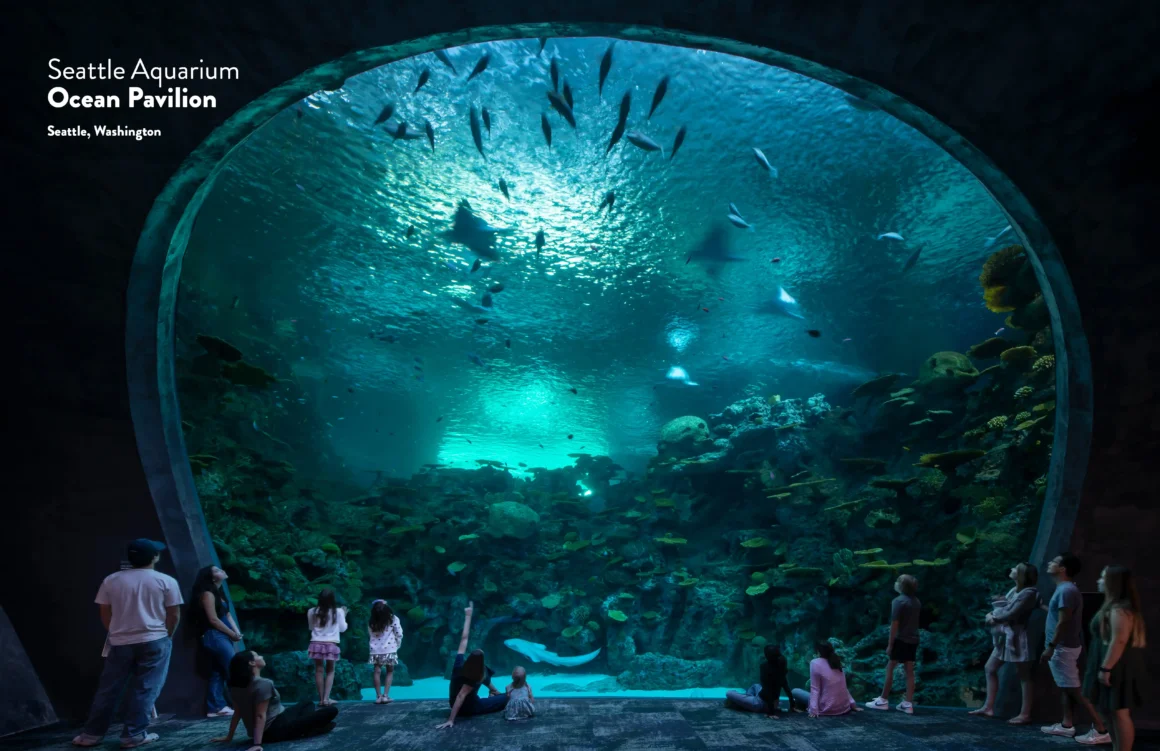
The Reef, Ocean Pavilion’s central habitat which cantilevers over the main entrance plaza, highlights a diverse coral reef ecosystem with more than 120 species of fish visible from an enormous, curved cathedral window, and from multiple vantage points that transport guests below the water’s surface. Other vignettes and exhibitions across the building’s three levels express the interconnectivity of ocean and human ecosystems, an ethos continued above in the public roof garden where seating spaces intertwine with Indigenous plants and panoramic views of the city, ocean, and mountains beyond.


To honor and acknowledge the Aquarium’s location on the traditional lands of the Coast Salish people, the project team worked closely with Indigenous consultants and members of the urban Native community to inform the design, and cultural framework for the building, landscape, exhibits, and public art. Engagement included hearing traditional stories from tribal elders, workshops with tribal youth, and regular design sessions with Indigenous consultants.
Sustainability is one of the core institutional values of the Seattle Aquarium, and the Ocean Pavilion is targeting LEED Gold and ILFI’s Zero Carbon certification. Sustainable strategies include the use of recycled and healthy materials such as carpeting created from abandoned fishing nets and used water bottles; building electrification and the elimination of fossil fuels; reducing embodied carbon by about a third via material strategies including low-carbon concrete mix designs; reducing operational carbon by heat sharing between the building and life support systems; and water reduction via a semi-closed system that optimizes seawater usage from the Sound to interior habitats.

Architects: LMN Architects
Design Team: Mark Reddington, Osama Quotah, Scott Crawford, Hanna Kato, Todd Schwisow, Mary Anne Smith, Vanessa Abin-Fuentes, Alex Woodhouse, Rives Kitchell, and Masako Wada
Exhibition Designers: Thinc Design
General Contractor: Turner Construction Company
Client: Seattle Aquarium Society
Photographers: Lara Swimmer/Esto